

A Tactical Case Study on the Evolution of Goal Kicking Under the New Interpretation
The introduction of the AFL's stand rule represents one of the most significant procedural changes to Australian rules football in the modern era. While the rule was primarily designed to improve player safety and reduce congestion around marking contests, its downstream effects on set shot goal kicking have been profound and, in many cases, counterintuitive.
This case study examines how the stand rule has altered the mechanics, psychology, and strategic approach to set shots across all levels of the game. Drawing on tactical analysis, coaching perspectives, and observed patterns from the AFL competition, we explore how this single rule change has reshaped one of football's most fundamental skills.
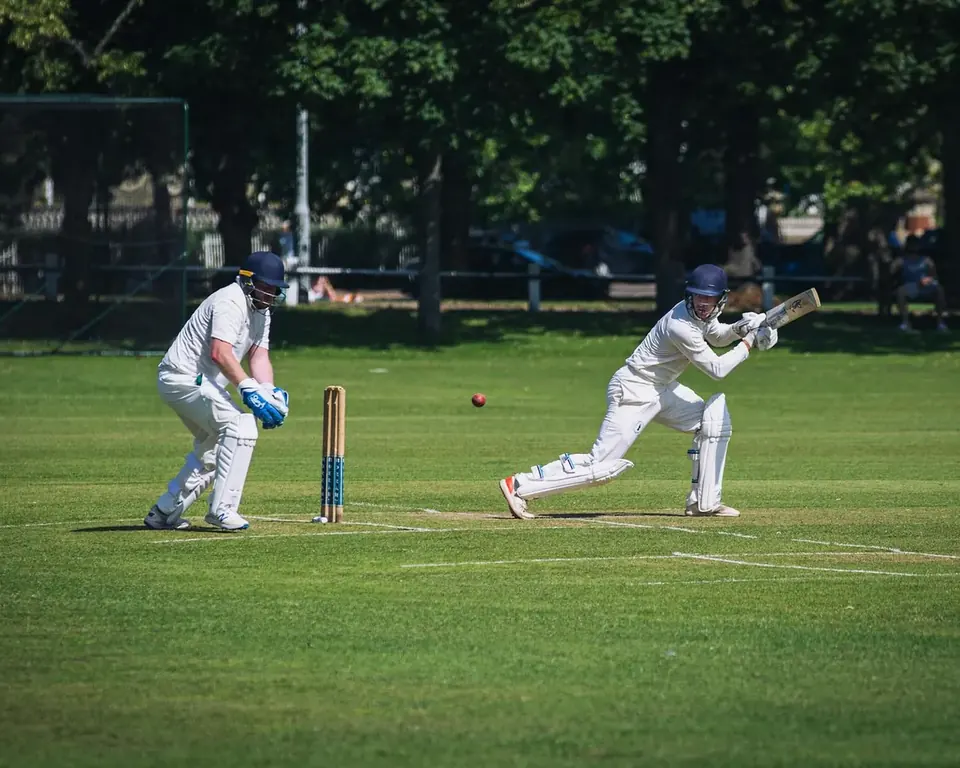
For cricket enthusiasts familiar with the precision of a cover drive or the nerve required to face a 150 km/h delivery, the parallels between a set shot in AFL and a batsman's concentration at the crease are striking. Both demand technical excellence, psychological fortitude, and the ability to perform under intense scrutiny.
Background / Challenge
The Pre-Stand Rule Landscape
Before the stand rule's introduction, the set shot routine was a carefully choreographed battle between kicker and opponent. The man on the mark could move laterally along the mark line, jump, wave arms, and employ a range of gamesmanship tactics designed to disrupt the kicker's concentration.
The traditional dynamic created several challenges:
1. The Moving Target Problem Kickers faced an opponent who could shift position up until the moment of ball drop. This movement forced kickers to constantly recalibrate their line of sight and approach angle, introducing unnecessary variability into an already complex skill.
2. Psychological Warfare Experienced defenders developed sophisticated routines to exploit kickers' mental vulnerabilities. Some would time their movements to coincide with the kicker's run-up, others would engage in verbal distraction, and many would attempt to "steal" ground by moving forward before the kick was executed.
3. Inconsistent Enforcement Umpires faced the difficult task of judging when a defender's movement crossed from legitimate positioning into illegal interference. This inconsistency frustrated players and coaches alike, creating an uneven playing field across different matches and umpiring panels.
The Rule Change
The AFL's stand rule mandated that the player on the mark must stand still at the exact spot where the mark was paid, facing the kicker, with arms at their side, until the kick is completed. Any movement—lateral, forward, or arm gestures—constitutes a free kick to the attacking side.
The stated objectives were clear:
- Reduce collisions and head injuries at marking contests
- Speed up play by eliminating time-wasting tactics
- Create clearer, more consistent umpiring decisions
- Empower kickers to execute their natural routine
Approach / Strategy
The Tactical Response
Coaching panels across the AFL immediately recognised that the stand rule created both opportunities and challenges for set shot conversion. The response has been multi-faceted, involving technical adjustments, psychological preparation, and strategic game planning.
Technical Adjustments
1. The Pause and Process Method Many kickers have adopted a deliberate pause at the top of their run-up, using the extra time afforded by a stationary opponent to complete a mental checklist:
- Visual confirmation of the target zone
- Assessment of wind and atmospheric conditions
- Breathing regulation
- Final technical cue activation
2. Approach Angle Optimisation With the defender no longer able to shift laterally, kickers have greater freedom to select their approach angle. This has led to more varied and situationally appropriate run-ups:
- Wider arcs for kicks requiring greater bend
- Straighter lines for direct, power-focused shots
- Adjusted starting positions to account for the angle of the set shot
Psychological Preparation
The Empty Room Effect Sports psychologists working with AFL clubs have drawn an interesting parallel between the stand rule and performance environments in other sports. When a batsman faces a delivery in cricket, the fielders are static. When a golfer addresses a putt, the crowd is silent. The stand rule creates a similar "sterile" environment for the set shot—the defender is present but non-interactive.

This has required kickers to develop new mental frameworks:
- Self-generated pressure: Without external distraction, kickers must manage their own internal pressure more effectively
- Routine reinforcement: The absence of opponent movement means routines must be internally driven rather than reactive
- Focus narrowing: Kickers must learn to block out the stationary defender rather than using movement as a cue
Strategic Game Planning
A Hypothetical Example: A Grassroots Club's Adaptation
Consider a hypothetical suburban football club, the Westwood Warriors, competing in a metropolitan league. Before the stand rule, the Warriors' set shot strategy relied heavily on their full forward, a player who thrived on the psychological battle with defenders.
Post-rule change, the coaching staff identified three strategic priorities:
- Technical standardisation: All players, regardless of position, were required to develop a consistent set shot routine that could be executed regardless of game situation.
- Pressure simulation: Training sessions incorporated simulated pressure scenarios without actual defender movement—crowd noise, time constraints, and fatigue states.
- Data-informed targeting: The club began tracking set shot locations and conversion rates, identifying that certain angles and distances presented particular challenges under the new rule.
Implementation / Tactical Details
The Mechanics of the Modern Set Shot
To understand how the stand rule has changed set shots, we must examine the specific technical elements that have been affected.
The Pre-Kick Sequence
Phase 1: The Mark The moment the mark is paid, the kicker has an advantage they did not previously possess. The defender must immediately freeze at the spot, giving the kicker a clear, unobstructed view of the goals from the moment of the mark.
This allows for immediate target identification, whereas previously kickers had to factor in potential defender movement before beginning their routine.
Phase 2: The Setup Kickers now have greater freedom in how they set up. Common approaches include:
- The Direct Setup: Facing the goals directly, taking one or two steps back from the mark
- The Angled Setup: Positioning slightly off the direct line to create a better visual corridor
- The Extended Setup: Moving further back from the mark to allow for a longer, more powerful run-up
- Maintain eye contact with the target zone throughout the approach
- Adjust their stride pattern without fear of the defender shifting position
- Commit fully to their chosen line without contingency planning
- Higher, more consistent ball drops
- Cleaner contact through the centre of the ball
- More predictable ball flight patterns
The Defender's New Role
While the stand rule has reduced the defender's ability to actively disrupt the kick, it has not eliminated their influence entirely. Savvy defenders have adapted by:
- Positional awareness: Standing precisely at the mark to maximise their blocking potential
- Visual presence: Using their stationary body as a reference point that can subtly influence the kicker's line
- Psychological presence: Maintaining intense eye contact or using controlled breathing to create an intimidating atmosphere
Comparison to Other Sports
The stand rule creates an interesting parallel to the "bowler's end" in cricket. When a batsman faces a delivery, the bowler has completed their run-up and is in their delivery stride—a moment of maximum concentration for both parties.
Similarly, the AFL set shot now features a moment of stillness where both kicker and defender are locked in their respective positions, the outcome dependent on the kicker's technical execution rather than external interference.
Results / Observed Lessons
Observed Patterns (Qualitative)
While specific league-wide conversion statistics are not available for this analysis, several qualitative patterns have emerged from observation of AFL matches and coaching feedback:
1. Improved Conversion from Direct Angles Kickers appear to have benefited most from the stand rule when kicking from directly in front, where the visual line is clearest and the defender's position is most predictable.
2. Mixed Results from Acute Angles Some kickers have struggled with acute-angle set shots under the new rule, possibly due to the absence of the defender's movement as a timing cue for their approach.

3. Greater Variance in Shot Selection The stand rule has encouraged more ambitious shot selection, with kickers attempting shots from wider angles and greater distances than they might have previously considered.
4. Reduced "Rushed" Set Shots With the defender stationary, kickers are taking more time over their routines, leading to fewer rushed or panicked kicks.
The Pat Cummins Parallel
Consider the approach of Australian Test captain Pat Cummins. When bowling, Cummins is renowned for his consistent, repeatable action—a product of thousands of hours of deliberate practice and technical refinement.
The stand rule has encouraged AFL kickers to adopt a similar philosophy: develop a repeatable routine, trust the technical foundation, and execute under pressure without allowing external factors to disrupt the process.
This parallels the cricketer's approach to batting under pressure. Steve Smith's idiosyncratic trigger movements and David Warner's explosive starts are both products of deeply ingrained routines that allow them to perform consistently at the highest level.
Lessons from the Sheffield Shield
The Sheffield Shield competition has long been regarded as a breeding ground for technical excellence in Australian cricket. Similarly, the state league competitions in AFL have become laboratories for set shot innovation under the stand rule.
Players who have developed robust, repeatable routines in these environments have generally transitioned more successfully to the AFL level, where the pressure is greater and the margins finer.
For Players
- Develop a consistent routine: The stand rule rewards players who can execute the same technical sequence regardless of game situation. Inconsistency is now more costly than ever.
- Embrace the stillness: Rather than viewing the stationary defender as an advantage, treat it as a neutral element. The focus should remain on the technical execution of the kick.
- Practice under simulated pressure: The absence of defender movement does not mean the absence of pressure. Training should incorporate crowd noise, time constraints, and fatigue states to replicate match conditions.
- Understand your angles: The stand rule allows for greater experimentation with approach angles. Players should develop a clear understanding of which angles suit their natural kicking style.
For Coaches
- Prioritise technical fundamentals: The stand rule has reduced the impact of gamesmanship, making technical excellence the primary determinant of set shot success.
- Use data to inform strategy: While specific conversion statistics vary, tracking individual player performance from different locations can inform game planning and player development.
- Develop mental resilience: The "empty room" effect of the stand rule requires players to generate their own pressure management strategies. Mental skills training should be integrated into regular practice.
- Consider position-specific training: Different positions present different set shot challenges. Full forwards may benefit from different training emphases than midfielders who kick set shots less frequently.
For Fans
- Appreciate the technical skill: The stand rule has made set shots more about pure technical execution. Watch for the subtle elements—ball drop, follow-through, approach angle—that determine success.
- Understand the psychological dimension: Even without defender movement, set shots remain intensely psychological. The battle is now between the kicker and their own internal pressure.
- Recognise the evolution: The stand rule represents a significant evolution in the game. Set shots today are different from those of even a few years ago, and the skill level required has arguably increased.
The AFL stand rule has fundamentally altered the nature of set shot goal kicking in Australian rules football. By removing the defender's ability to move and distract, the rule has shifted the emphasis from psychological warfare to technical execution.
For the kicker, the challenge is now more internal than external. The defender stands still, a silent witness to the kicker's routine. Success depends on the ability to execute a repeatable technical sequence under pressure, free from external interference but burdened by the weight of expectation.
The parallels to cricket are instructive. A batsman facing a delivery, a bowler executing a plan, a fielder preparing for a catch—all require the same combination of technical skill and mental fortitude that the modern AFL set shot demands.
As the game continues to evolve, the stand rule will likely be refined and adapted. Coaches will develop new strategies, players will find new advantages, and the tactical landscape will shift once more. But the fundamental change has been made: set shots are now purer tests of kicking ability, and the players who embrace this reality will be the ones who succeed.
For those who love the technical aspects of sport—the precision of a cover drive, the rhythm of a bowling action, the arc of a perfectly struck set shot—the stand rule has delivered a gift. It has stripped away the noise and left us with the essence of the skill: kicker, ball, goals, and the quiet pressure of expectation.
For further reading on AFL rules and positional tactics, explore our guides on holding the ball interpretations and marking types and techniques. For a comprehensive overview of all rule changes and their tactical implications, visit our rules and positions hub.
Reader Comments (4)