

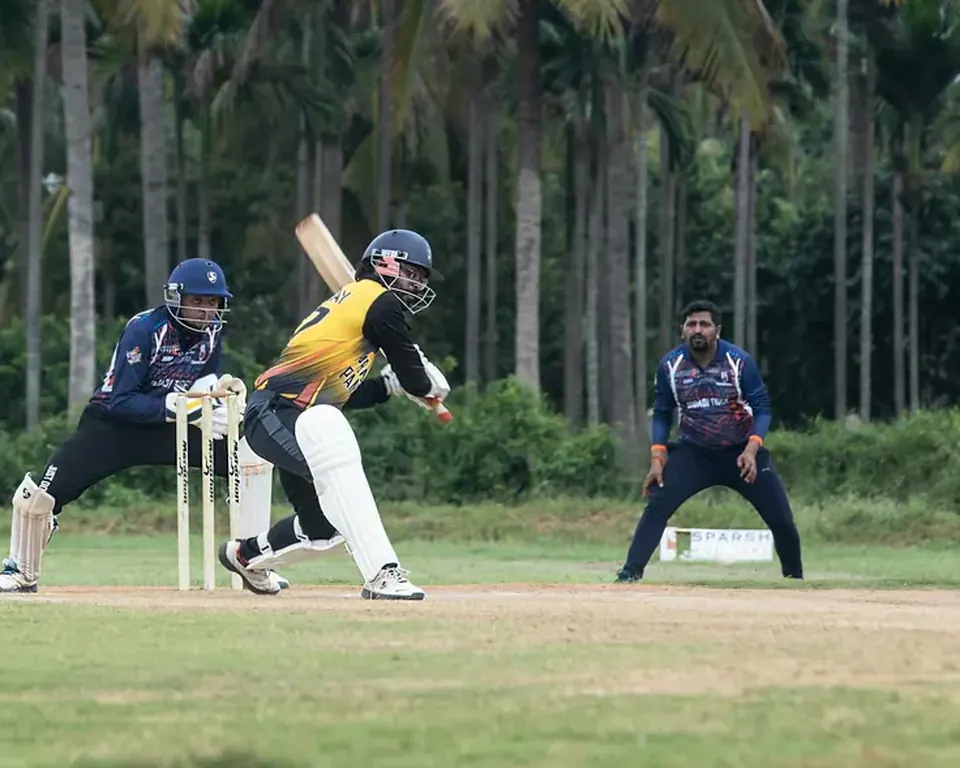
G’day, cricket fans! If you’ve ever wondered who’s led the Baggy Green in Test cricket, you’re in for a treat. From the early days of the Ashes to the modern era of international cricket, Australia’s Test captains have shaped the game we love. Whether you’re a die-hard follower of the Sheffield Shield or just tuning in for the Big Bash League, knowing your skippers is a rite of passage. Let’s dive into the full list of Australia’s Test captains, past and present.
The Complete List of Australian Test Captains
Here’s the full rundown, from the first captain to the current leader. Each entry includes their tenure, key moments, and a bit of personality.

Dave Gregory (1877–1879)
The very first Test captain of Australia, Gregory led the side in the inaugural Test match against England in 1877. He was a wicketkeeper-batter from New South Wales, and his leadership set the tone for the Baggy Green’s fighting spirit. Fun fact: he was part of the famous Gregory family that produced several Test players.Billy Murdoch (1880–1890)
Murdoch took over after Gregory and became a legend of early Australian cricket. He captained the side to Australia’s first Ashes series win in 1882, the same year the Ashes urn was born. Murdoch later played for England, making him a unique figure in the sport’s history.Jack Blackham (1885–1894)
The first wicketkeeper to captain Australia, Blackham was a tough competitor. He led the team in 8 Tests, including a famous win at the Sydney Cricket Ground (SCG) in 1892. His gloves were as sharp as his tactics.George Giffen (1894–1895)
A brilliant all-rounder, Giffen captained Australia in a brief stint. He’s best known for his batting and bowling, but his leadership was overshadowed by the team’s struggles against England. Still, he’s a South Australian icon.Harry Trott (1896–1898)
Trott steadied the ship after Giffen, leading Australia to a 2-1 Ashes victory in 1897–98. He was a steady hand, and his captaincy helped rebuild the team’s confidence. The MCG crowd loved him.Joe Darling (1899–1905)
One of Australia’s greatest early captains, Darling led the team to two Ashes series wins. He was a left-handed batter and a tactical figure, often outsmarting English bowlers. His 1902 side is considered one of the best ever.Monty Noble (1903–1909)
Noble was a classy batter and a shrewd leader. He captained Australia to a 4-1 Ashes win in 1907–08, a dominant performance. His calm demeanor earned him respect from teammates and opponents alike.Clem Hill (1910–1912)
Hill was a fiery character, known for his aggressive batting and no-nonsense leadership. He captained Australia in a tough period, including a series loss to South Africa. His clashes with the Cricket Australia board were legendary.Syd Gregory (1912)
The nephew of Dave Gregory, Syd had a short stint as captain during the 1912 Triangular Tournament in England. It was a chaotic time, with player disputes and poor form. He’s remembered more for his batting than his captaincy.Warwick Armstrong (1920–1921)
“The Big Ship” was a larger-than-life figure, both in size and personality. Armstrong led Australia to a 5-0 Ashes whitewash in 1920–21, the first of its kind. He was a master strategist and a beloved leader.Herbie Collins (1921–1926)
Collins took over after Armstrong and had a mixed record. He led Australia to a 4-1 Ashes win in 1924–25 but struggled against England later. He was a solid batter, but his captaincy was often conservative.Jack Ryder (1928–1929)
Ryder’s captaincy was brief, covering a tough Ashes series loss in 1928–29. He was a talented all-rounder, but his leadership couldn’t stop England’s dominance. He later became a respected administrator.Bill Woodfull (1930–1934)
Woodfull is best known for his dignified response to the Bodyline series in 1932–33. He refused to complain publicly, earning admiration worldwide. His captaincy was calm and principled, even under extreme pressure.Don Bradman (1936–1948)
The greatest batter of all time, Bradman also captained Australia with flair. He led the team to Ashes victories in 1936–37 and 1948, the latter being the famous “Invincibles” tour. His tactical approach was unmatched.Lindsay Hassett (1949–1953)
Hassett succeeded Bradman and led Australia through a rebuilding phase. He was a witty and popular captain, known for his light-hearted approach. His 1953 Ashes loss was a rare blemish.Ian Johnson (1954–1956)
Johnson was an off-spinner and a thoughtful captain. He led Australia to a 3-0 Ashes win in 1954–55 but struggled against England later. His leadership was steady, if not spectacular.Richie Benaud (1958–1963)
Benaud was a revolutionary captain, known for his aggressive tactics and leg-spin bowling. He led Australia to Ashes victories in 1958–59 and 1961, and his famous “Benaud’s boys” era set the standard for modern leadership. He later became a legendary commentator.Bob Simpson (1963–1967)
Simpson was a gritty opener and a determined captain. He led Australia through a tough period, including a 1-1 Ashes draw in 1965–66. His dedication to the team was unquestioned.Bill Lawry (1967–1971)
Lawry was a stubborn batter and a hard-nosed captain. He famously lost the Ashes in 1970–71 under controversial circumstances, including the first ODI. His sacking sparked debate, but he’s remembered as a fighter.Ian Chappell (1971–1975)
Chappell brought a tough, no-nonsense attitude to the captaincy. He led Australia to Ashes wins in 1972 and 1974–75, and his team was known for its aggression. He also mentored future greats like Greg Chappell.Greg Chappell (1975–1983)
The younger Chappell was a stylish batter and a shrewd captain. He led Australia to Ashes victories in 1975, 1977, and 1979–80, but the World Series Cricket split marred his tenure. His leadership was complex but effective.Kim Hughes (1979–1984)
Hughes was a talented batter but a captain under immense pressure. He led Australia during the rebel tours to South Africa, which divided the team. He resigned in tears after a loss to the West Indies.Allan Border (1984–1994)
Border is the captain who rebuilt Australian cricket. He took over a struggling team and led them to a 2-1 Ashes win in 1986–87 and a 4-0 victory in 1989. His gritty batting and tough leadership turned the team into a powerhouse.Mark Taylor (1994–1999)
Taylor was a calm and respected captain. He led Australia to Ashes wins in 1994–95 and 1997, and his famous 334 not out against Pakistan is a Test classic. He also mentored Steve Waugh.Steve Waugh (1999–2004)
Waugh was a fierce competitor, known for his mental toughness. He led Australia to a record 16 consecutive Test wins and Ashes victories in 2001 and 2002–03. His “mental disintegration” tactics defined an era.Ricky Ponting (2004–2010)
Ponting was a brilliant batter and a dominant captain. He led Australia to Ashes wins in 2004, 2006–07, and 2009, but the 2005 Ashes loss stung. His aggressive style set a high bar.Michael Clarke (2011–2015)
Clarke was a stylish batter and a tactical captain. He led Australia to a 5-0 Ashes whitewash in 2013–14 and a World Cup win in 2015. His leadership was marked by innovation, like the “Clarke’s call” on DRS.Steve Smith (2014–2023)
Smith took over after Clarke and initially struggled, but he grew into a brilliant captain. He led Australia to Ashes wins in 2017–18 and 2021–22, but the 2018 Sandpapergate scandal tarnished his legacy. He later returned to the role.Tim Paine (2018–2021)
Paine was a surprise captain after the Sandpapergate scandal. He led Australia with dignity, rebuilding the team’s reputation. His 2021 Ashes win was a highlight, but a sexting scandal ended his tenure.Pat Cummins (2021–Present)
The current captain, Cummins is a world-class fast bowler and a calm leader. He led Australia to a 4-0 Ashes win in 2021–22 and a World Test Championship title in 2023. His captaincy is defined by humility and tactical smarts.For more on the teams and competitions these captains led, check out our clubs-competitions page. And if you’re keen on the domestic scene, the Sheffield Shield standings are a great place to start. For the latest on the Big Bash League, our BBL draft explained article has you covered.
Summary
From Dave Gregory’s first steps in 1877 to Pat Cummins’ modern era, Australia’s Test captains have been a mix of legends, fighters, and thinkers. Each brought their own style, whether it was Bradman’s genius, Border’s grit, or Waugh’s steel. The Ashes, the Border-Gavaskar Trophy, and the ICC Men’s T20 World Cup have all been shaped by these leaders. So next time you watch a Test at the MCG or SCG, tip your hat to the skippers who made it all happen. Cheers, mates!
Reader Comments (0)