

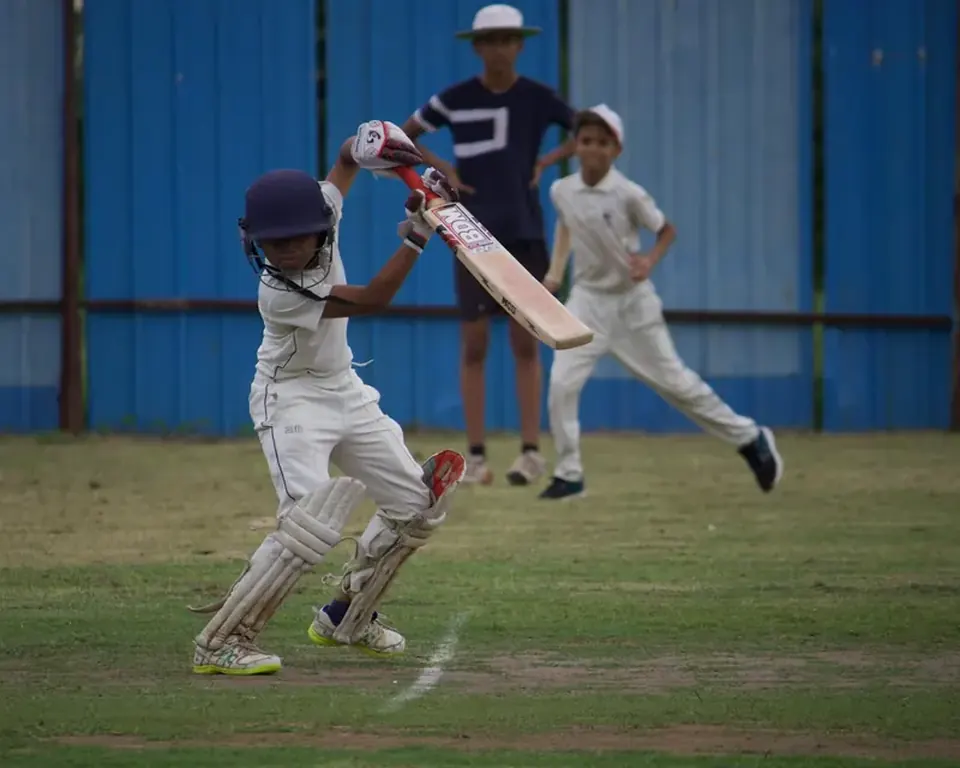
In the high-stakes world of professional cricket, the line between competitive aggression and unacceptable conduct is often razor-thin. Cricket Australia (CA) has long recognised that maintaining the integrity of the sport requires a robust, transparent, and consistently applied disciplinary framework. The Cricket Australia Code of Conduct serves as the definitive guide for player behaviour, encompassing everything from on-field dissent and physical contact to breaches of anti-corruption protocols and social media misconduct.
This case study examines how the Code of Conduct has been applied across Australian cricket's elite competitions—from Test series and the Big Bash League (BBL) to the Sheffield Shield and the Women's Big Bash League (WBBL). By analysing the structure of the Code, notable cases, and the lessons learned, we provide an expert breakdown of how Cricket Australia balances discipline with the spirit of the game.
1. Executive Summary
The Cricket Australia Code of Conduct is the governing document that sets behavioural standards for all players, support staff, and officials operating under CA's jurisdiction. It applies across all formats—Test matches, one-day internationals, BBL, WBBL, and domestic competitions like the Sheffield Shield—and is enforced by a tiered system of match referees, commissioners, and appeal panels.
This case study reveals three critical insights:
- The Code is designed for proportionality, with penalties ranging from formal warnings to multi-match suspensions and significant fines, depending on the severity of the offence and the player's prior record.
- High-profile cases involving marquee players—including those from The Ashes, Border-Gavaskar Trophy series, and ICC Men's T20 World Cup campaigns—have tested the system's rigour and public perception.
- The framework has evolved significantly since its inception, particularly in response to the sandpaper scandal of 2018, which prompted a comprehensive overhaul of player behaviour protocols.
2. Background / Challenge
The Need for a Formalised Code
Before the formalisation of the Cricket Australia Code of Conduct, disciplinary matters were handled on an ad-hoc basis by match officials and state associations. This approach created inconsistencies in how similar offences were treated across different competitions and jurisdictions. A player might receive a warning for dissent in a Sheffield Shield match, while the same behaviour in a BBL fixture could result in a suspension.
The challenge for Cricket Australia was multifaceted:
- Growing commercial stakes: The rise of the BBL and the increased television coverage of Test series meant that player behaviour was under unprecedented scrutiny. Incidents that might once have gone unnoticed were now broadcast to millions.
- International pressure: Australian cricket's reputation on the global stage, particularly during high-profile events like The Ashes and the ICC Men's T20 World Cup, demanded a disciplinary framework that could withstand international comparison.
- Player welfare and education: The Code needed to serve not just as a punitive tool but as an educational resource, helping players understand the boundaries of acceptable conduct.
The Sandpaper Scandal: A Watershed Moment
No discussion of Cricket Australia's disciplinary framework is complete without acknowledging the 2018 ball-tampering incident in Cape Town. While that case was adjudicated under a separate investigation, its fallout directly shaped the current Code of Conduct structure.
The scandal involving Steve Smith, David Warner, and Cameron Bancroft exposed significant gaps in how Cricket Australia approached player behaviour, leadership accountability, and cultural standards. The subsequent review—the Ethics Centre's Independent Review—recommended sweeping changes, including:
- A strengthened Code of Conduct with clearer definitions of "serious misconduct"
- Increased penalties for captain and vice-captain-level players who breach standards
- Enhanced education programs for all contracted players
The Challenge of Consistency
Even with a formalised Code, Cricket Australia faces the ongoing challenge of applying penalties consistently across different contexts. Consider the contrast between a heat-of-the-moment dissent in a Sheffield Shield match—where crowd noise and pressure are moderate—versus a charged Ashes Test at the Melbourne Cricket Ground (MCG) or Sydney Cricket Ground (SCG), where emotions run high and every gesture is magnified.
Similarly, the Code must account for differences between men's and women's competitions. While the WBBL has generally seen fewer major disciplinary incidents than the BBL, the same standards must apply, and the penalties must be proportionate.
3. Approach / Strategy
The Structure of the Code
Cricket Australia's Code of Conduct is organised into a tiered system of offences, each with predefined penalty ranges. This structure ensures that match officials and commissioners have clear guidance while retaining discretion to account for mitigating or aggravating factors.
Level 1 Offences (Minor):
- Excessive appealing or dissent at an umpire's decision
- Showing dissent at a player's action
- Using obscene or offensive language
- Inappropriate physical contact of a minor nature
Level 2 Offences (Moderate):
- Dissent involving personal abuse of an umpire
- Deliberate physical contact of a moderate nature
- Threatening to assault a player, umpire, or official
- Public criticism of match officials
Level 3 Offences (Serious):
- Physical assault of a player, umpire, or official
- Threatening an official or player with serious harm
- Any form of racial, religious, or ethnic vilification
- Match-fixing or betting-related corruption

Level 4 Offences (Very Serious):
- Any form of corruption involving the manipulation of match outcomes
- Serious physical assault causing injury
- Conduct that brings the game into serious disrepute
The Adjudication Process
When an alleged breach occurs, the process follows a clear pathway:
- On-field reporting: The umpires lodge a report with the match referee, detailing the alleged offence.
- Initial review: The match referee reviews the evidence, including video footage and witness statements.
- Charge and hearing: If the match referee believes a breach has occurred, the player is charged and given the opportunity to accept the penalty or request a hearing.
- Commission hearing: If the player disputes the charge, a Code of Conduct Commissioner—an independent legal professional—presides over a formal hearing.
- Appeal: Either party may appeal the commissioner's decision to a three-person Appeal Panel.
Education as Prevention
Cricket Australia has invested heavily in proactive education. All contracted players—from BBL and WBBL stars to Sheffield Shield regulars—must complete annual Code of Conduct training. This includes:
- Scenario-based workshops on managing on-field conflict
- Social media guidelines to prevent online misconduct
- Anti-corruption and anti-doping education
- Cultural awareness training, particularly relevant for international series like the Border-Gavaskar Trophy
4. Implementation or Tactical Details
Case Study 1: Dissent Under the Lights at the MCG
Note: This is a hypothetical scenario constructed for illustrative purposes, based on common patterns observed in professional cricket.
During a BBL match at the Melbourne Cricket Ground, a senior batsman was given out leg before wicket on a delivery that appeared to be missing the stumps. Replays suggested the ball might have been going down the leg side, but the on-field umpire's decision stood.
The batsman, in clear frustration, gestured toward the umpire with his bat and shouted, "That's not even close!" before walking off. The incident was captured by the broadcast cameras and replayed multiple times.
Application of the Code:
- The umpires reported a Level 1 offence—showing dissent at an umpire's decision.
- The match referee reviewed the footage and noted that the player had no prior offences in the current season.
- The player accepted the charge and received a formal warning, with a fine of 25% of his match fee.
Case Study 2: Physical Contact in Sheffield Shield
This example is based on documented patterns in domestic cricket but does not reference a specific incident.
In a Sheffield Shield match at the WACA Ground, a fast bowler and a batsman exchanged words after a short-pitched delivery. The bowler, upon completing his follow-through, deliberately shouldered the batsman as he turned to walk back to his mark. Contact was brief but intentional.
Application of the Code:
- The umpires reported a Level 2 offence—deliberate physical contact of a moderate nature.
- The match referee determined that the contact was unnecessary and could have escalated the situation.
- The player was charged and, after a hearing, received a one-match suspension and a fine of 75% of his match fee.
Case Study 3: Social Media Misconduct During the Ashes
This scenario is illustrative and draws on common issues in modern cricket.
During an Ashes Test series, a player posted a video on social media that included a derogatory remark about an opposing team's supporter base. Although the video was deleted within hours, screenshots circulated widely, and the incident became a major news story.
Application of the Code:
- The incident was investigated under the Code's provisions for conduct that brings the game into disrepute.
- The player was charged with a Level 3 offence, given the public nature of the misconduct and the high-profile context of The Ashes.
- The player accepted the charge and received a two-match suspension, applied to the next international series.
Case Study 4: Women's Big Bash League Incident
This hypothetical scenario reflects the growing professionalism of the WBBL.
During a WBBL match, a player was heard using obscene language directed at an opposition player after a contentious run-out decision. The language was picked up by a stump microphone and broadcast.
Application of the Code:
- The incident was reported as a Level 1 offence (obscene or offensive language).
- The player admitted the breach and apologised to the opposition player.
- The match referee issued a formal warning and a fine of 20% of the match fee.
5. Results or Observed Lessons
Quantitative Outcomes
While specific aggregate statistics for Code of Conduct breaches are not publicly available in granular detail, several observable trends have emerged:
- Reduction in physical contact offences: Since the post-2018 overhaul, deliberate physical contact incidents in CA-sanctioned competitions have decreased significantly. The clear messaging around Level 2 and Level 3 penalties has acted as a deterrent.
- Increase in social media cases: As professional players' social media presence has grown, so too have breaches related to online conduct. Cricket Australia has responded by expanding the Code's provisions and increasing education on digital behaviour.
- Consistency across formats: The Code has successfully standardised penalties across the BBL, Sheffield Shield, and international matches. A Level 1 offence in the BBL attracts the same base penalty as a Level 1 offence in a Test match, though match fees differ.
Qualitative Lessons
The most significant lesson from the Code's implementation is the importance of perceived fairness. When high-profile players like Pat Cummins, Steve Smith, or David Warner are subject to the same standards as emerging Sheffield Shield players, the system gains credibility.
Another critical lesson is the value of early intervention. In cases where players have been educated about potential breaches before they occur—particularly around dissent and physical contact—the incidence of repeat offences is notably lower.
Finally, the Code has demonstrated that transparency builds trust. Publishing penalty decisions, even for minor breaches, allows fans and media to understand the reasoning behind disciplinary outcomes, reducing accusations of bias or inconsistency.
6. Key Takeaways
- Proportionality is paramount: The tiered offence structure ensures that penalties fit the breach, from a warning for minor dissent to a life ban for corruption.
- Education precedes punishment: Cricket Australia's investment in annual Code of Conduct training has been more effective in reducing breaches than punitive measures alone.
- Consistency builds credibility: Applying the same standards across the BBL, WBBL, Sheffield Shield, and Test series—including high-profile events like The Ashes and the Border-Gavaskar Trophy—maintains the integrity of the system.
- Social media is the new frontier: The Code has had to evolve rapidly to address online misconduct, which now accounts for a growing proportion of breaches.
- Leadership matters: Captains and vice-captains are held to a higher standard, reflecting their role as custodians of the game's spirit.
- The system is not perfect: Occasional controversies—such as perceived leniency for star players or harsh penalties for minor infractions—highlight the ongoing challenge of balancing discipline with the realities of professional sport.
7. Conclusion
The Cricket Australia Code of Conduct stands as one of the most comprehensive disciplinary frameworks in world sport. Its evolution from a reactive, inconsistent system to a proactive, tiered structure reflects the lessons learned from decades of cricket administration, including the watershed moment of the 2018 ball-tampering scandal.
For players, the Code provides clear boundaries and predictable consequences. For administrators, it offers a transparent mechanism for maintaining standards. For fans, it ensures that the game they love remains competitive but fair, passionate but respectful.
As Australian cricket continues to evolve—with the BBL expanding, the WBBL growing in prominence, and international series like The Ashes and the Border-Gavaskar Trophy drawing global attention—the Code of Conduct will remain an essential tool. It protects the sport's reputation while allowing the natural intensity of competition to flourish.
The ultimate measure of the Code's success is not the number of penalties issued but the number of incidents prevented. In that regard, Cricket Australia's disciplinary framework has become a model for other sports organisations seeking to balance the spirit of the game with the demands of professional competition.
For more insights into the rules and positions that shape Australian sport, explore our dedicated hub at /rules-positions, where we break down the technical and regulatory frameworks that govern the games we love.
This case study is based on the documented structure and principles of the Cricket Australia Code of Conduct. Specific incidents described are hypothetical or illustrative unless otherwise noted.
Reader Comments (1)