

How to Build Cricket Endurance
Cricket is a sport of explosive bursts—a searing cover drive, a lightning-quick bouncer, a diving stop at point—but it’s also a marathon. Whether you’re grinding through a two-day Sheffield Shield fixture, fielding for 90 overs in the Big Bash League, or chasing leather on a scorching Saturday at the local oval, endurance is the unsung hero of performance. Without it, your technique falters, your decision-making dulls, and your late-innings impact evaporates.
For the aspiring Australian cricketer—from the WACA Ground junior to the MCG hopeful—building cricket-specific endurance isn’t about simply running laps. It’s about replicating the stop-start, high-intensity demands of the game while maintaining technical integrity. This troubleshooting guide addresses the most common endurance problems players face, offering practical, safe solutions you can integrate into your training.
Problem 1: Running Out of Steam in the Final Session of a Test Match
Symptoms: You start the day feeling sharp, but by the third session, your footwork is sluggish, your drive is mistimed, and your concentration wavers. You’re making errors you wouldn’t make in the first hour.
Causes: Test cricket demands sustained aerobic capacity combined with repeated anaerobic efforts. A common mistake is training exclusively with long, steady-state running (e.g., 5km jogs), which doesn’t mimic the intermittent nature of batting or bowling. Your body adapts to a constant pace, not the stop-start rhythm of a day’s play.
Solution: Shift to interval-based conditioning that mirrors match demands.
- Design a Cricket-Specific Interval Session: Alternate 60 seconds of high-intensity work (e.g., shuttle runs, bounding, or fast bowling run-ups) with 60 seconds of active recovery (light jogging or walking). Repeat for 20 minutes.
- Incorporate Skill Under Fatigue: After each high-intensity burst, perform a technical skill—a forward defensive, a straight drive, or a bowling action—for 30 seconds. This trains your body to maintain technique when tired.
- Progress Gradually: Start with a 1:2 work-to-rest ratio (e.g., 30 seconds work, 60 seconds rest) and over 4–6 weeks, reduce rest to 30 seconds. This builds both aerobic base and anaerobic power.
- Simulate Match Timings: Once a week, complete a 90-minute session that replicates a session’s length, with breaks every 30 minutes to mimic drinks and changeovers.
Problem 2: Inability to Maintain Bowling Speeds and Accuracy in the Final Overs
Symptoms: Your first spell is sharp and consistent, but by the 15th over of the day, your pace drops, your line strays, and you’re leaking runs. You feel a general heaviness in your legs.
Causes: Bowling endurance requires a unique combination of core stability, leg strength, and cardiovascular recovery. Many bowlers neglect strength training for the lower body and core, relying solely on bowling practice. Additionally, poor pacing—starting too fast—can leave you empty in the final overs.
Solution: Build a bowling-specific endurance program.
- Strengthen the Foundation: Twice a week, perform compound lifts (squats, lunges, deadlifts) and core work (planks, Russian twists). Focus on single-leg exercises (e.g., Bulgarian split squats) to mimic the bowling stride.
- Practice “Death Over” Bowling: In training, bowl your final 3–4 overs at full intensity, simulating the pressure of a T20 World Cup or BBL finish. Have a partner call out scores and field changes to add mental load.
- Use the “Pacing Ladder”: In a net session, bowl 6 balls at 80% effort, then 6 at 90%, then 6 at 100%. Rest 2 minutes, then repeat. This teaches your body to conserve energy while still delivering high-quality spells.
- Monitor Your Run-Up: A longer, more explosive run-up can be draining. If you’re fading late, shorten your run-up by 2–3 strides and focus on a powerful, economical action.
Problem 3: Struggling to Field at High Intensity for Long Periods
Symptoms: You start the innings sharp and agile, but after 30–40 overs, you’re slow to react, your throws are weaker, and you’re dropping catches you’d normally take. You feel a general lethargy.
Causes: Fielding is a high-intensity, reactive activity. The problem often lies in training fielding in isolation—without cardiovascular fatigue. Your body hasn’t learned to maintain explosive movement when tired.
Solution: Integrate fielding drills into your conditioning.
- Perform “Fatigue Fielding” Sessions: Start with a 10-minute high-intensity interval run (e.g., 30-second sprints, 30-second jogs). Immediately follow with a fielding drill: 10 rapid-fire ground fielding pickups, 5 high catches, and 5 throws at the stumps.
- Practice the “Run-and-Pickup” Drill: Set up cones 20 metres apart. Sprint to a cone, pick up a ball, throw it back to a partner, then sprint to the next cone. Repeat for 10 reps. Rest 60 seconds. Complete 3 sets.
- Work on Reactive Agility: Use a reaction ball or have a partner call “left” or “right” as you sprint. This trains your brain to process and move while fatigued.
- Hydrate Strategically: Dehydration is a major cause of late-innings lethargy. Drink 500ml of water 2 hours before play, then 200ml every 30 minutes during the session.
Problem 4: Running Out of Energy During a Long Innings
Symptoms: You start your innings confidently, but after 50–60 balls, your running between wickets slows, your concentration dips, and you’re playing poor shots. You feel mentally foggy.
Causes: Batting endurance is both physical and mental. The physical side involves repeated sprint efforts (running between wickets) and the ability to maintain a stable base for shot execution. The mental side is often neglected—players don’t train their focus for long periods.
Solution: Build batting endurance through simulation.
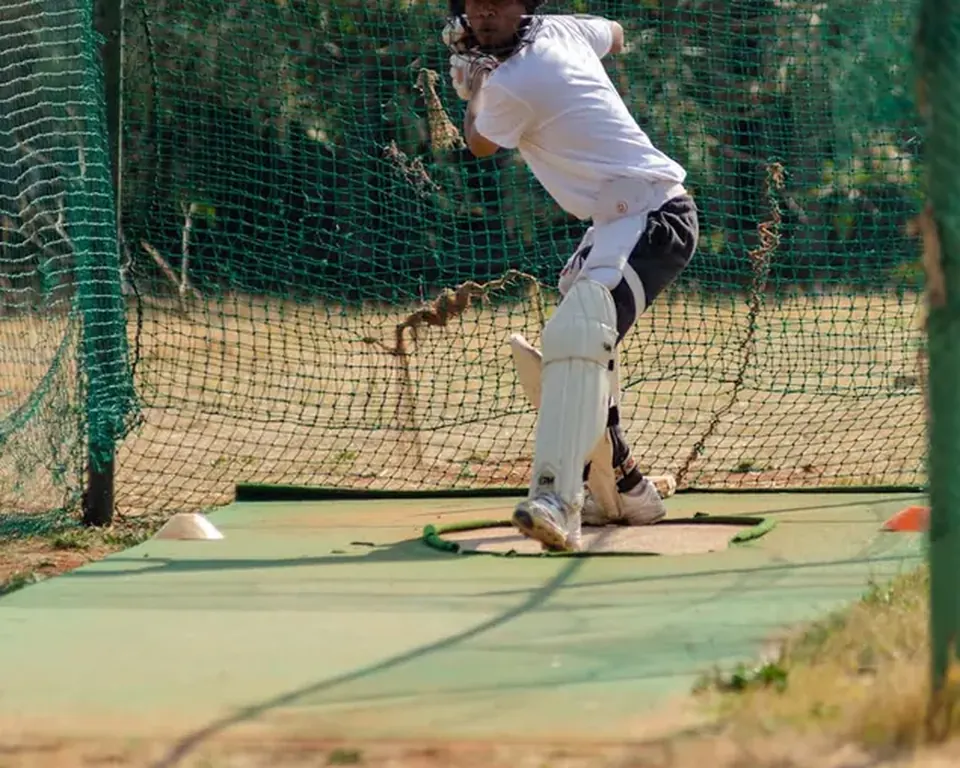
- Practice “Long Innings” in the Nets: Bat for 50–60 balls in a single session. Divide it into phases: first 20 balls (defensive, get your eye in), next 20 (rotate strike), final 20 (accelerate). This trains your body to pace energy output.
- Incorporate Running Between Wickets: After every 5 balls, sprint 2 runs (a double) to a cone 22 yards away. This replicates the physical demand of a real innings.
- Use Mental Fatigue Training: While batting, have a coach or partner call out imaginary scores, field placements, or pressure scenarios (e.g., “You need 10 off the last over”). This builds mental resilience.
- Focus on Breathing: Between balls, take 3 deep, slow breaths. This lowers your heart rate and improves concentration. Practice this in every net session until it becomes automatic.
Problem 5: Losing Power and Accuracy in Throws Late in the Game
Symptoms: Your first few throws are flat and accurate, but by the 40th over, your throws are short, off-target, and lack zip. You feel a dull ache in your shoulder.
Causes: Throwing endurance is a combination of shoulder strength, core stability, and proper mechanics. Many players neglect specific throwing conditioning, relying on game-time throws alone. Additionally, poor technique—throwing across the body or with a low elbow—can cause early fatigue.

Solution: Develop a throwing endurance routine.
- Strengthen the Rotator Cuff: Twice a week, perform external rotation, internal rotation, and “Y-T-W-L” exercises with light resistance bands. This protects the shoulder from overuse.
- Practice “Volume Throwing”: In training, throw 30–40 balls at a target from 30 metres. Start with 10 throws at 50% effort, then 10 at 75%, then 10 at 90%. Rest 2 minutes, then repeat.
- Emphasise Mechanics: Keep your elbow high (above shoulder height) and throw across your body. A low elbow puts more strain on the shoulder and reduces power.
- Use a “Throwing Ladder”: Once a week, complete 5 sets of 10 throws from increasing distances (20m, 30m, 40m, 50m, 60m). Rest 90 seconds between sets. This builds both power and endurance.
Problem 6: Difficulty Recovering Between Multiple Days of Play
Symptoms: After a long day in the field, you wake up feeling stiff, heavy-legged, and mentally flat. Your performance drops significantly on the second day.
Causes: Recovery is an active process, not a passive one. Many players neglect post-match nutrition, hydration, and sleep. Additionally, they fail to perform light recovery activity, leading to stiffness and fatigue.
Solution: Implement a structured recovery protocol.
- Refuel Immediately: Within 30 minutes of play, consume a mix of protein (e.g., a protein shake, chicken, or eggs) and carbohydrates (e.g., a banana, rice, or a sports drink). This kickstarts muscle repair.
- Perform Active Recovery: 10–15 minutes of light jogging, cycling, or swimming after play helps flush lactic acid and reduces stiffness. Do this before showering.
- Prioritise Sleep: Aim for 8–9 hours of sleep. If you can’t get that, a 20-minute power nap in the afternoon can help. Avoid screens for 30 minutes before bed.
- Use Compression and Ice: If you have access, wear compression tights post-play. For sore joints or muscles, apply ice for 15 minutes. Never ice for longer than 20 minutes.
- Hydrate Across the Day: Weigh yourself before and after play. For every kilogram lost, drink 1.5 litres of water. This prevents cumulative dehydration.
Prevention Tips
Building cricket endurance isn’t a one-off fix; it’s a lifestyle. Here are key prevention strategies:
- Train the Energy Systems: Combine aerobic base (2–3 steady runs per week of 30–45 minutes) with anaerobic intervals (2 sessions per week of high-intensity work).
- Periodise Your Season: During pre-season, focus on building aerobic capacity. In-season, maintain with 2–3 interval sessions per week. Off-season, give your body a break with light activity.
- Listen to Your Body: Overtraining is a real risk. If you feel persistently fatigued, have poor sleep, or notice a drop in performance, take a rest day or a light week.
- Work on Technique: Efficient movement saves energy. Have a coach review your bowling action, batting stance, and throwing mechanics. Small tweaks can yield big endurance gains.
- Fuel Your Performance: Eat a balanced diet rich in lean protein, complex carbs, and healthy fats. Avoid heavy, greasy meals before play.
When to Seek Professional Guidance
While this guide provides a robust framework, there are times when professional input is essential:
- Persistent Fatigue or Underperformance: If you’ve followed a structured endurance program for 6–8 weeks without improvement, consult a sports scientist or a strength and conditioning coach. They can assess your training load, recovery, and technique.
- Recurring Injuries: If you experience repeated muscle strains, joint pain, or overuse injuries (e.g., stress fractures, tendonitis), see a sports physiotherapist. They can identify biomechanical flaws and design a rehabilitation program.
- Medical Concerns: If you have a pre-existing condition (e.g., asthma, heart issues, diabetes) or experience chest pain, dizziness, or shortness of breath during exercise, consult your doctor before starting any new training program.
- Mental Fatigue or Burnout: If you’re losing motivation, feeling anxious about performance, or struggling with concentration, a sports psychologist can help you develop mental resilience and coping strategies.
Building cricket endurance is a journey, not a destination. It requires patience, consistency, and a willingness to train smarter, not just harder. By identifying your specific problem areas and applying these targeted solutions, you’ll find yourself still sharp in the final session, still explosive in the 50th over, and still making smart decisions when it matters most. That’s the difference between a good player and a great one—and it’s well within your reach.
Reader Comments (0)