

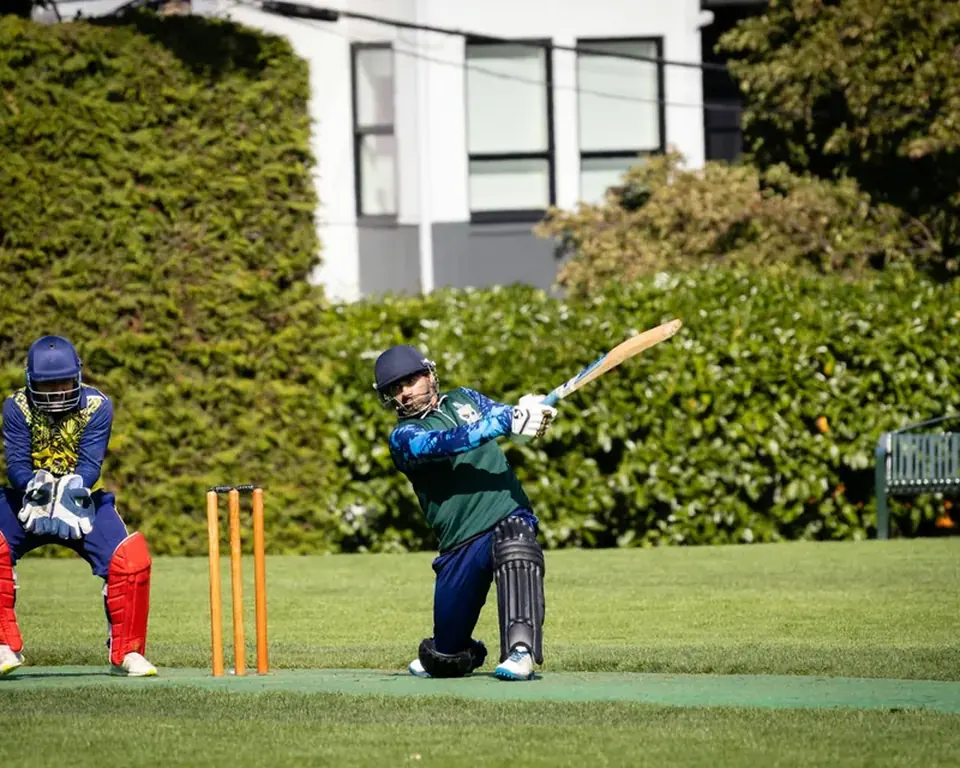
Understanding how to read a bowler is one of the most crucial skills in cricket, whether you're a player facing a hostile spell at the crease, a coach analysing opposition tactics, or a fan trying to predict what's coming next during an Ashes Test or a Big Bash League thriller. Yet, many cricketers and enthusiasts struggle with this art, misreading deliveries, falling into predictable patterns, or failing to adapt to different bowling styles across formats.
This troubleshooting guide addresses the most common problems encountered when trying to read a bowler—from grip and wrist position to field placements and psychological cues. Each section breaks down the symptoms, causes, and step-by-step solutions to help you improve your reading of the game, whether you're facing a top quick in a Test series or a mystery spinner in the KFC Big Bash League.
Problem 1: You Can't Tell a Seam-Up Delivery from a Cutters Ball
Symptoms: You consistently misjudge the pace and bounce of deliveries. The ball seems to hold up or skid through unexpectedly. You're beaten by subtle changes in pace, especially from medium-pacers.
Causes:
- You're watching the bowler's arm action rather than their wrist and fingers.
- You're failing to notice the seam position at the point of release.
- You're not tracking the ball early enough from the hand.
- Focus on the wrist and fingers first. A seam-up delivery sees the wrist locked and the seam pointing straight down the pitch. A cutter sees the wrist roll over the ball, with the seam angled toward fine leg or gully. Practice watching only the bowler's hand from the point of delivery—ignore the run-up entirely for now.
- Identify the release point. Seam-up deliveries are released with the palm facing the batsman. Cutters see the palm rotating outward or inward. Watch for this rotation in the bowler's follow-through.
- Use net sessions to train your eyes. Have a bowling machine or throwdown specialist deliver seam-up and cutter variations at similar speeds. Call out "seam" or "cutter" before the ball bounces.
- Study video analysis. Slow-motion replays of top bowlers during Test series will reveal the subtle wrist positions. Compare their seam-up balls to their cutters. For additional resources, visit our video analysis tips section.
Problem 2: You Struggle to Read Spin—Especially the Googly and Doosra
Symptoms: You play down the wrong line against spinners. You're beaten through the gate or edged to slip frequently. You feel you're guessing rather than reading the ball out of the hand.
Causes:
- You're watching the ball after it pitches rather than the bowler's hand.
- You're not recognising the different revolutions and wrist positions.
- You're overthinking and second-guessing your initial read.
- Watch the bowler's wrist and fingers at release. A leg-spinner's googly is bowled with the wrist turned so the back of the hand faces the batsman at release. A doosra from an off-spinner sees the wrist cocked backward. Train yourself to see these positions live.
- Focus on the seam orientation. For a leg-break, the seam points toward the slips. For a googly, it points toward fine leg. For an off-break, the seam points toward first slip; for a doosra, it points toward square leg. Practice identifying the seam as it leaves the hand.
- Use the bounce and drift cues. A googly often drifts in the air away from the right-hander before turning in. A leg-break drifts into the right-hander. Note these subtle movements—they happen within a fraction of a second but are consistent.
- Train with a partner. Have a spinner bowl from a shortened run-up, and call out "leg-break" or "googly" before the ball bounces. Start at 15 metres and gradually move back to full length.
- Review match footage. Watch how top players approach quality spin—they often pick the ball from the hand and adjust their trigger movement accordingly. The Border-Gavaskar Trophy series provides excellent examples of reading world-class spin.

Problem 3: You Can't Predict the Line and Length from the Run-Up
Symptoms: You're caught off guard by changes in length. You're early or late on deliveries that look similar from the hand. You struggle to adjust to bowlers who change their release point.
Causes:
- You're not tracking the bowler's alignment relative to the stumps.
- You're ignoring the angle of approach.
- You're not factoring in the bowler's release point height.
- Track the bowler's front foot landing. A bowler who lands close to the stumps tends to angle the ball across the right-hander. A wider release point angles the ball in. Watch the front foot in relation to the bowling crease.
- Note the release height. Bowlers with a high release point (like tall quicks) tend to extract more bounce. Those with a lower release point (like shorter bowlers or spinners) tend to get more skid. Adjust your trigger movement accordingly.
- Look for patterns in the run-up. Some bowlers shorten their run-up for slower balls or change their arm speed. A sudden change in rhythm often signals a variation.
- Use your pre-delivery routine. As the bowler begins their run-up, fix your eyes on their head and shoulders. The head position—whether upright or tilted—can indicate the intended line. A head tilted toward off-stump often means a ball aimed at off or outside off.
- Practise with a bowling machine. Set the machine to deliver at different lengths from different angles. Work on watching the ball from the release point, not the machine's wheel.
Problem 4: You're Fooled by Field Placements and Bowling Changes
Symptoms: You play into the trap set by the captain. You're dismissed attempting shots that the field is designed to prevent. You don't adjust your game plan when the bowling changes.
Causes:
- You're not reading the field placement in relation to the bowler's strengths.
- You're ignoring the match situation and the bowler's role.
- You're not anticipating the bowling change based on the phase of play.
- Read the field before the bowler runs in. Identify the gaps and the areas the captain is protecting. If there's a deep square leg and fine leg, the bowler is likely bowling short. If there's a ring field, they're bowling a fuller length.
- Understand the bowler's role in the format. In a Big Bash League match, a bowler might be brought on to contain or to take wickets. In a Test series, a bowler might be bowling a holding spell or a strike spell. Read the team's intent from the field.
- Watch for bowling changes in relation to the over number. In T20 cricket, bowlers are often brought back for specific phases—death overs, powerplay, or against particular batsmen. Anticipate the change and prepare mentally.
- Use the "two-balls-ahead" rule. After each delivery, reassess the field and the bowler's plan. If the bowler has bowled three short balls in a row, expect a fuller one. If they've bowled three leg-stump lines, expect off-stump.
- Study match tactics. Watch how captains set fields for different bowlers. The tactics and training section on our site offers detailed breakdowns of field placements for various bowling styles.
Problem 5: You Can't Read the Bowler's Intent—Are They Attacking or Defending?
Symptoms: You're surprised when a bowler suddenly attacks or defends. You don't know when to take risks or when to consolidate. You're dismissed playing a defensive shot to a ball meant to attack.
Causes:
- You're not reading the bowler's body language and intensity.
- You're ignoring the match situation and the bowler's recent figures.
- You're not factoring in the pitch conditions and the state of the ball.
- Watch the bowler's body language. A bowler who is charging in with intensity, glaring at you, or adjusting their field aggressively is likely attacking. A bowler who is ambling in, looking at the ground, or having a quiet word with the captain is likely defending.
- Read the match situation. If the team needs wickets, the bowler will attack. If they need to contain, they'll defend. In a Test series, a bowler might attack with a new ball and defend with an older one. In a Big Bash League match, a bowler might attack in the powerplay and defend in the middle overs.
- Note the bowler's recent figures. If a bowler has just been hit for boundaries, they might be under pressure and bowl defensively. If they've taken wickets, they'll attack. Track the momentum shifts.
- Assess the pitch and ball condition. A dry, dusty pitch might see spinners attacking from the first ball. A green pitch might see quicks attacking. A scuffed, old ball might see bowlers defending rather than searching for swing.
- Train your mental game. Practise visualising different match scenarios. Imagine you're facing a bowler who needs to defend a low total in a T20 match. How does their approach differ from when they need wickets? Use power-hitting workouts to build confidence in your ability to read and respond.

Problem 6: You Struggle to Read Bowlers Across Different Formats
Symptoms: You play Test match pace well but struggle in the Big Bash League. Or you dominate T20 but fail in Sheffield Shield cricket. Your technique doesn't adapt to the different demands.
Causes:
- You're using the same trigger movements and mental cues across all formats.
- You're not adjusting your reading to the different bowling strategies.
- You're not factoring in the different pitch and ball conditions.
- Understand the format's bowling patterns. In Test cricket (especially an Ashes series), bowlers build pressure over long spells. In T20 cricket, bowlers use variations and change of pace. In one-day cricket, bowlers mix containment with wicket-taking. Adapt your reading accordingly.
- Adjust your trigger movement. In Test matches, you might need a more stable base to handle long spells. In T20, you might need a more dynamic trigger to handle pace variations. Practise both.
- Study the bowler's format-specific data. Some bowlers are more effective in certain formats. A quick might bowl more bouncers in Test cricket but more yorkers in T20. A top batsman might face more spin in the Sheffield Shield but more pace in the Big Bash League. Know the bowler's tendencies.
- Train in different conditions. Practise on different pitches—fast, slow, turning, bouncing. Use different balls—new, old, white, red. The more you expose yourself to different conditions, the better you'll read the bowler.
- Watch cross-format matches. See how top players adjust their reading when switching from the Women's Big Bash League or the ICC Men's T20 World Cup to Test cricket. Their technique changes subtly—and so should yours.
Problem 7: You Can't Read the Bowler's Variations—Especially the Slower Ball and Bouncer
Symptoms: You're beaten by the slower ball, either playing too early or being deceived in the air. You're caught off guard by the bouncer, either ducking too late or pulling too early.
Causes:
- You're not watching the bowler's wrist and fingers for the slower ball.
- You're not tracking the ball's trajectory in the air.
- You're not reading the bowler's intent for the bouncer.
- Watch for the slower ball grip. A slower ball is often bowled with a split-finger grip or a back-of-the-hand grip. The wrist is usually looser, and the release point is slightly lower. Practise identifying these cues from the hand.
- Look for the change in arm speed. A slower ball often sees a slightly slower arm action, though top-class bowlers are very subtle. Watch for a slight pause or a different follow-through.
- Track the ball in the air. A slower ball often hangs in the air slightly longer. A bouncer is released with a higher trajectory. Train your eyes to pick up these differences within the first 10 metres of flight.
- Read the bouncer from the release point. A bouncer is usually released with the wrist cocked and the ball aimed at a higher point. The bowler's head might also lift slightly. Watch for these cues.
- Use net sessions to practise. Have a bowler deliver a mix of stock balls, slower balls, and bouncers. Call out "slow" or "bounce" before the ball reaches you. Gradually reduce the time you have to call out.
Prevention Tips
- Develop a pre-ball routine. Before each delivery, take a deep breath, look at the field, and fix your eyes on the bowler's hand. This routine helps you stay focused and reduces the chance of misreading.
- Train your peripheral vision. Good reading of a bowler often comes from seeing the whole picture—the run-up, the field, the bowler's body language—not just the ball. Practise watching the bowler's entire approach while keeping your eyes on the release point.
- Use video analysis regularly. Review your own innings and those of the players you admire. The video analysis tips section on our site provides detailed guidance on breaking down bowling actions.
- Practice with different bowlers. The more you face different styles—fast, slow, spin, seam, left-arm, right-arm—the better you'll become at reading them. Seek out variety in net sessions.
- Stay adaptable. No two bowlers are identical. What works against one might not work against another. Keep an open mind and adjust your reading based on what you see, not what you expect.
When to Seek Professional Guidance
- If you're consistently misreading bowlers after six months of focused practice, consider a session with a qualified coach. They can use video analysis to identify specific cues you're missing.
- If you're experiencing vision or eye-tracking issues, consult an optometrist. Some cricketers benefit from specialised vision training.
- If you're struggling with the mental side of reading bowlers—anxiety, overthinking, or lack of confidence—a sports psychologist can help you develop mental routines and strategies.
- If you're a coach trying to teach reading bowlers to a team, consider bringing in a specialist batting coach for a workshop. Many Cricket Australia-accredited coaches offer sessions focused on reading the bowler.
- If you're preparing for a specific series or tournament, such as the ICC Men's T20 World Cup or an Ashes Test, work with your coach to develop a detailed plan for each bowler you're likely to face. The tactics and training section offers templates for bowler analysis.
Reading a bowler is a skill that can be learned, refined, and mastered with deliberate practice. By focusing on the specific cues—wrist position, seam orientation, release point, body language, and field placements—you can transform from a batsman who guesses to one who anticipates. Whether you're facing a top quick in a Test series at the Melbourne Cricket Ground, a mystery spinner in the Big Bash League at the Sydney Cricket Ground, or a seasoned quick in the Sheffield Shield at the WACA Ground, the principles remain the same. Watch the hand, read the intent, and trust your training.
Reader Comments (0)