

Bowling Machine Drills for Batting Practice
Master Your Batting with Precision Practice
Whether you’re a grassroots player aiming for a spot in your local club’s first XI or a seasoned Sheffield Shield aspirant, the bowling machine is one of the most effective training tools at your disposal. It removes the variability of a human bowler, allowing you to focus on technique, timing, and shot selection under repeatable conditions. In this guide, we’ll walk you through a practical checklist of cricket bowling machine drills that will sharpen your game for everything from a gruelling Test series to the fast-paced action of the Big Bash League (BBL) or Women’s Big Bash League (WBBL). By the end, you’ll have a structured session plan that builds confidence and consistency at the crease.
Prerequisites / What You Need
Before you fire up the machine, ensure you have the following:
- Bowling machine (e.g., a Bola, Jugs, or similar model) with adjustable speed, swing, and bounce settings.
- A net or practice pitch (preferably with a turf or synthetic surface that mimics match conditions).
- Full protective gear: helmet, pads, gloves, thigh pad, arm guard, and box. Safety is non-negotiable.
- A partner or coach to operate the machine and provide feedback (optional but highly recommended).
- A notepad or training log to track progress and adjustments.
- A clear goal for the session: e.g., “improve off-side drives against full deliveries” or “work on pull shots against short-pitched bowling.”
Step-by-Step Process
Step 1: Set Up the Machine for Your Primary Focus
Begin by deciding what aspect of your batting you want to target. For example, if you’re preparing for an Ashes Test, you might focus on defending against seam movement. If the T20 World Cup is on the horizon, you’ll want to work on power hitting. Adjust the machine accordingly:
- Speed: Start at 70–80% of your match pace (e.g., 120–130 km/h for medium-pace, 135–145 km/h for fast bowling). Increase gradually as you find rhythm.
- Length: Use a consistent length (full, good, or short) for the first drill. Later, you can mix them.
- Swing or seam: Activate swing settings to simulate movement off the pitch, mimicking conditions at the MCG or SCG.
Step 2: The “Forward Defence” Drill (Full Length, No Movement)
This is the foundation of Test cricket batting. Set the machine to bowl a consistent full length (pitched up around 6–8 metres from your stumps) at medium pace with no swing.
- Your task: Play a forward defence to each ball. Focus on:
- A high elbow and a straight bat.
- Your front foot reaching the pitch of the ball.
- Soft hands to absorb the impact, guiding the ball to the ground.
- Reps: 20 balls. After each, reset your stance and breathe.
Step 3: The “Off-Side Drive” Drill (Full Length, Off-Stump Line)
Now, shift the machine to bowl full deliveries on or just outside off stump. Set a moderate pace (120–130 km/h) with no swing.
- Your task: Play the cover drive or square drive. Key checkpoints:
- Your head stays still, eyes level.
- The bat comes through in a straight arc, with the top hand controlling the shot.
- Your body weight transfers forward, and you finish with the bat pointing toward the target.
- Reps: 15 balls. Alternate between cover drives and straight drives (if the ball is on middle stump).
Step 4: The “Back Foot Punch” Drill (Short Length, Body Line)
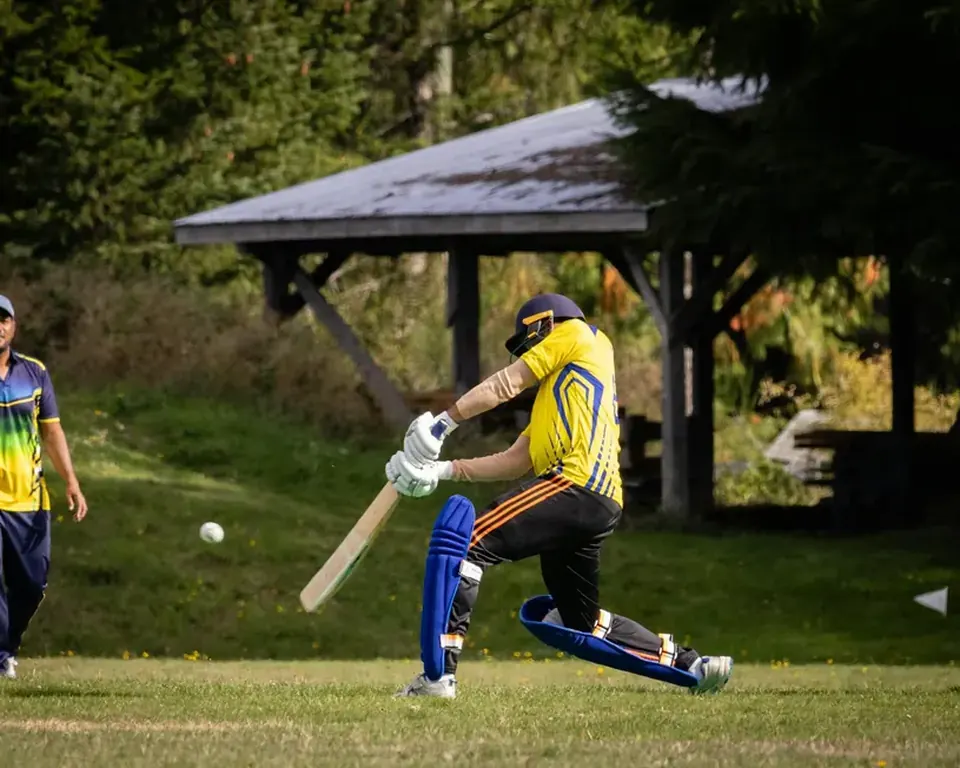
Set the machine to bowl short-pitched deliveries (around 4–5 metres from your stumps) at 130–140 km/h. No swing, but aim for a line that forces you onto the back foot—around middle and off.
- Your task: Play the back foot punch (or cut shot, if the ball is wide). Focus on:
- Transferring weight onto your back foot quickly.
- Keeping your hands close to your body.
- Punching the ball into the ground or through the covers.
- Reps: 20 balls. If you’re comfortable, add a slight angle to the machine to simulate a bowler angling the ball across you.
Step 5: The “Pull and Hook” Drill (Short Length, Leg Stump Line)
Adjust the machine to bowl short deliveries on or just outside leg stump at 130–140 km/h. This simulates a bowler targeting your ribcage.
- Your task: Play the pull shot (if the ball is chest-high) or the hook (if it’s head-high). Safety first:
- Wear a helmet with a grille.
- Keep your eyes on the ball until contact.
- Rotate your hips and shoulders, and keep your head still.
- Reps: 15 balls. If you struggle, reduce speed to 110 km/h and focus on timing.
Step 6: The “Swing and Seam” Drill (Mixed Length, Swing Settings)
Now, activate the machine’s swing or seam function. Set it to bowl a mix of lengths (full, good, short) and a line just outside off stump. Speed: 130–140 km/h.
- Your task: React to each ball. You’re not looking to attack—just defend or leave. Focus on:
- Reading the swing off the pitch.
- Playing as late as possible.
- Using your feet to get to the pitch of the ball (if it’s full) or staying back (if short).
- Reps: 30 balls. This simulates the moving ball conditions you’d face at the WACA Ground or SCG in a Test series.
Step 7: The “Power Hitting” Drill (Full Length, Slot Delivery)
For limited-overs cricket (BBL, T20 World Cup), you need to clear the ropes. Set the machine to bowl full, waist-high deliveries on a good length (5–7 metres) at 120–130 km/h. No swing.
- Your task: Hit the ball straight or over mid-off. Key points:
- Use your bottom hand to generate power, but don’t sacrifice balance.
- Swing through the line of the ball, not across it.
- Finish high with the bat to ensure elevation.
- Reps: 20 balls. Aim to hit at least 10 into the net roof or beyond the 30-metre circle.
Step 8: The “Two-Ball” Drill (Random Length, Random Line)
This is your match simulation. Set the machine to randomise length and line (use the random function if available) at 130–140 km/h. No swing for now.
- Your task: Play each ball on its merits. You have 2 seconds to decide: defend, leave, or attack. Prioritise:
- Good length balls: defend or punch.
- Full balls: drive or defend.
- Short balls: cut or pull (if safe).
- Reps: 40 balls. After 20, take a 2-minute break and review your decision-making with your coach.
Pro Tips / Common Mistakes
- Mistake #1: Over-relying on the machine. The bowling machine is a tool, not a replacement for facing live bowlers. Use it to refine technique, then test your skills in the nets against humans.
- Mistake #2: Ignoring footwork. Many players focus only on bat swing. Without proper foot movement—forward to full balls, back to short ones—your shots will be inconsistent.
- Mistake #3: Rushing the session. Take a 30-second break every 15 balls to reset. Fatigue leads to poor decision-making and injury risk.
- Pro tip: Use visualisation. Before each drill, close your eyes and picture yourself executing the perfect shot. This mental rehearsal is used by elite players like Pat Cummins (yes, even bowlers do it) to enhance performance.
- Pro tip: Track your progress. Keep a simple log: “Day 1: 20 forward defences, 15 drives, 10 pull shots. Missed 3 pull shots. Adjusted stance.” This helps you see improvement over weeks.
Checklist Summary
Use this checklist before, during, and after your session:
Pre-Session
- Warm up with dynamic stretches and light batting for 5–10 minutes.
- Inspect the bowling machine for safety (no loose parts, correct settings).
- Set a clear goal for the session (e.g., “improve off-side play”).
- Wear full protective gear (helmet, pads, gloves, etc.).
- Step 1: Forward defence drill (20 balls, full length, no swing).
- Step 2: Off-side drive drill (15 balls, full length, off-stump line).
- Step 3: Back foot punch drill (20 balls, short length, body line).
- Step 4: Pull and hook drill (15 balls, short length, leg stump line).
- Step 5: Swing and seam drill (30 balls, mixed length, swing on).
- Step 6: Power hitting drill (20 balls, full length, slot delivery).
- Step 7: Two-ball match simulation (40 balls, random length/line).
- Take breaks every 15–20 balls to maintain focus.
- Cool down with static stretches (focus on legs, back, and shoulders).
- Review your training log and note adjustments for next time.
- If you experienced pain, consult a qualified sports physiotherapist.
- For more on reading bowlers, check out our guide: How to Read a Bowler.
- To build power for the BBL or T20 World Cup, see: Power Hitting Workouts.
- For deeper tactical training, explore: Tactics & Training Hub.
Final Word
Consistency is the hallmark of great batting. Whether you’re facing the new ball in a Sheffield Shield match or chasing a target in the WBBL, these bowling machine drills will give you the repetition and focus needed to perform under pressure. Remember: the machine is your ally, not your crutch. Use it wisely, track your progress, and always prioritise safety. Now, get to the nets and start drilling.
Reader Comments (0)