

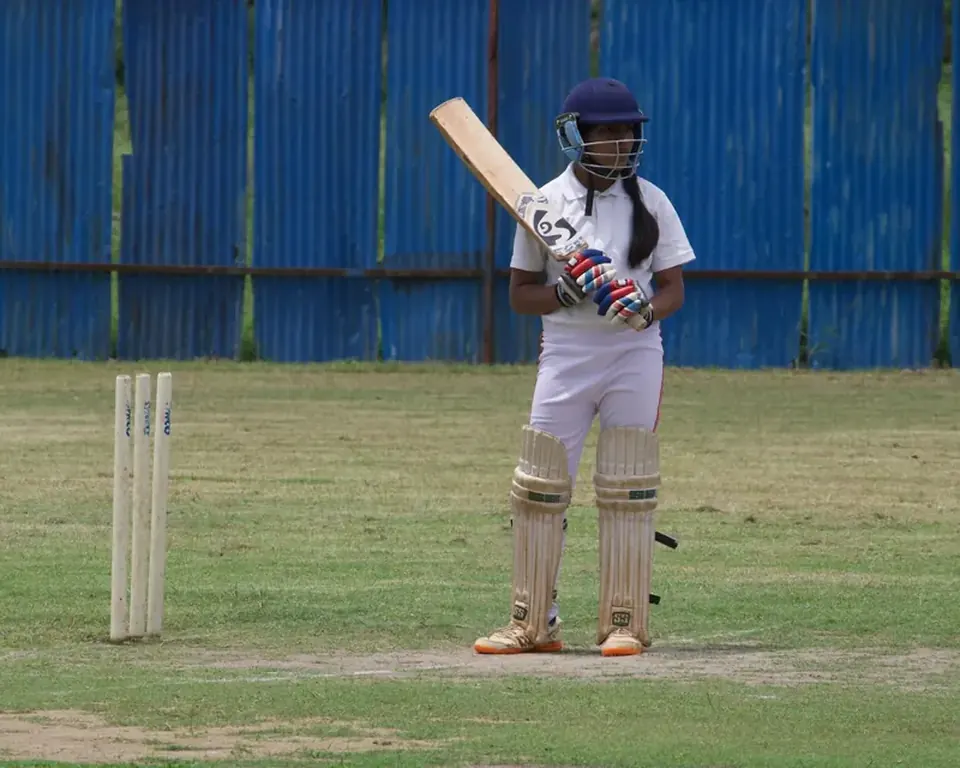
For the modern Australian cricketer, raw talent alone is no longer sufficient to compete at the highest levels of the sport. Whether you are aspiring to represent your state in a first-class competition, eyeing a spot in a professional franchise league, or simply looking to dominate your local club competition, cricket-specific strength training has become an indispensable component of success. The days of cricketers being simply "natural athletes" who rely solely on skill work are behind us. Today's game demands explosive power, enduring resilience, and a body built to withstand the unique stresses of a long summer.
This guide is designed for the serious cricketer, coach, and fan who wants to understand the "why" and "how" behind building a physique that can handle the rigours of a long-format series or a gruelling professional campaign. We will break down the fundamental principles of strength training tailored specifically for cricket, moving beyond generic gym programs to focus on the movements that translate directly to improved performance on the pitch.
Why Cricket Demands a Different Approach to Strength Training
Cricket is a sport of contradictions. It demands explosive, high-intensity efforts—a blistering yorker, a powerful cover drive, a lightning-quick run-out—interspersed with long periods of low-intensity activity or complete rest. This unique energy system profile means that a generic bodybuilding or powerlifting program will fall short. A cricketer’s strength training must be specific.
Consider the physical demands placed on a fast bowler. He must generate immense force through his legs and core to propel the ball at high speeds, repeat this effort over multiple spells in a day, and do so again over the course of a multi-day match. Similarly, a batsman requires incredible rotational power and core stability to manoeuvre his body into position to play his shots, while also needing the eccentric strength to absorb the impact of a heavy leather ball.
Cricket-specific strength training, therefore, focuses on three core pillars:
- Injury Resilience: Building strong tendons, ligaments, and muscles around the most vulnerable areas (lower back, hamstrings, shoulders, and knees).
- Power Output: Developing the rate of force production for faster bowling, harder hitting, and quicker running between wickets.
- Work Capacity: Enhancing the body's ability to recover between high-intensity efforts and maintain technical proficiency under fatigue.
The Foundation: Core Stability and Rotational Power
The core is the epicentre of almost every cricket movement. It is not just about having a six-pack; it is about building a functional, stable cylinder that can transfer force from the lower body to the upper body. A weak core is the single biggest contributor to lower back injuries in bowlers and a lack of power in batsmen.
Anti-Rotation and Anti-Extension
For a fast bowler, the most critical core function is resisting excessive spinal extension (arching the back) and rotation. When a bowler lands and braces for delivery, their core must act as a rigid platform. If it fails, the lumbar spine absorbs the brunt of the force, leading to stress fractures and chronic pain.
Key exercises for this include:
- Pallof Press: This is a non-negotiable exercise for any cricketer. It teaches the core to resist rotational forces. Stand sideways to a cable machine, hold the handle at your chest, and press it straight out in front of you. Fight the urge to rotate.
- Dead Bug: Excellent for teaching athletes to maintain a neutral spine while moving their limbs. It builds the mind-muscle connection for core bracing.
- Farmer's Carries: A simple yet brutally effective exercise. Pick up a heavy dumbbell in each hand and walk with perfect posture. This builds total-body tension and core stability under load.
Rotational Power for Batsmen
A batsman’s power is generated from the ground up, through the legs and hips, and is transferred across the torso to the bat. This rotational force is what allows top batsmen to clear the boundary with seemingly minimal effort.
Training this requires exercises that mimic the kinetic chain of a shot:
- Medicine Ball Rotational Throws: Stand side-on to a wall, adopt your batting stance, and explosively rotate your hips and torso to throw a medicine ball against the wall. Catch and repeat.
- Cable Rotational Rows: This combines a pulling movement with rotation, mimicking the action of a pull shot or a powerful on-drive.
- Landmine Rotations: Place one end of a barbell in a landmine attachment. Hold the other end, rotate your torso to lift it from one hip to the opposite shoulder, and control the descent.
Lower Body Strength: The Engine Room

The legs are where the power for fast bowling, explosive batting, and agile fielding originates. A strong lower body provides the stable base for a bowler to deliver the ball with pace and the platform for a batsman to drive through the line.
The Squat and Its Variations
The barbell back squat is a staple, but it must be programmed carefully. For cricketers, the focus is on depth and range of motion, not just moving maximum weight. A deep squat builds hip and ankle mobility, which is crucial for getting low to the ground for a low catch or playing a sweep shot.
- Front Squats: Often a better choice for cricketers as they place less shear force on the lower back and force an upright torso position, which translates well to a batsman's stance.
- Bulgarian Split Squats: This single-leg exercise is arguably the most important lower body movement for a fast bowler. It builds unilateral strength, stability, and balance, mimicking the single-leg landing and drive phase of the bowling action. It is also superb for building hamstring and glute strength, which are critical for preventing soft-tissue injuries.
- Box Jumps: A pure plyometric movement to develop explosive power in the hips and legs. Essential for quick first steps in the field and explosive acceleration between wickets.
The Deadlift and Hip Hinge
The deadlift pattern is the foundation of a safe and powerful bowling action. It teaches an athlete how to load their hamstrings and glutes while maintaining a neutral spine. This is the exact movement required for a bowler to gather momentum at the top of their mark and drive towards the crease.
- Romanian Deadlifts (RDLs): Focus on the eccentric (lowering) phase. This builds incredible hamstring strength and resilience, directly reducing the risk of hamstring strains.
- Single-Leg RDLs: Takes the hip hinge pattern onto one leg, further enhancing stability and proprioception. This is a high-performance drill for any cricketer.
- Kettlebell Swings: Develops explosive hip power and cardiovascular conditioning simultaneously. It is a fantastic tool for building the "engine" required for a long day in the field.
Upper Body: The Specifics of Throwing and Batting
While the lower body and core are the primary drivers, the upper body has specific roles that require targeted training. A fast bowler needs shoulder stability to withstand the deceleration forces of the bowling arm, while a fielder needs explosive power for long-distance throws.
The Rotator Cuff and Shoulder Health
Shoulder injuries are rife in cricket, particularly for fast bowlers and throwers. The repetitive, high-velocity nature of the bowling action places immense stress on the shoulder joint. Strength training must prioritise the small, stabilising muscles of the rotator cuff.
- External Rotations (Cable or Band): Performed with a straight arm or a 90/90 position, this is the single best exercise for shoulder health. It strengthens the often-neglected external rotators.
- Y-T-W-L Raises: A series of exercises on a bench or stability ball that builds strength and stability in the entire shoulder girdle.
- Landmine Press: A shoulder press variation that places the shoulder in a more natural, less impinged position compared to a barbell overhead press.
The Pull for a Powerful Throw
The ability to throw a cricket ball with speed and accuracy comes from a powerful lat and rear deltoid. A strong pulling musculature also helps a batsman control the bat through the hitting zone.
- Pull-Ups: A fundamental compound movement. Builds lat strength for throwing and general upper body strength.
- Bent-Over Rows: Builds thickness in the back and strengthens the posterior chain of the upper body.
- Medicine Ball Scoop Throws: Mimics the long-barrier throw from the deep. Explosively scoop a medicine ball from between your legs and launch it overhead.
Periodisation and the Cricket Calendar
Cricket-specific strength training is not a year-round, one-size-fits-all program. It must be periodised to align with the demands of the season. The Australian summer is long and demanding, with professional fixtures often overlapping.
Pre-Season (The Foundation Phase)
This is the time to build a base. The focus should be on general strength, hypertrophy (muscle building), and conditioning. Volume is high, and intensity is moderate. This is where you build the resilience to handle the season ahead.
- Goal: Increase muscle mass, improve work capacity, correct imbalances.
- Exercises: Higher volume squats, deadlifts, pull-ups, and core work.
In-Season (The Maintenance Phase)
Once the season begins, the goal shifts from building to maintaining. Training volume drops significantly, but intensity remains high. The aim is to keep the nervous system firing and the muscles strong without accumulating fatigue that will hinder performance.
- Goal: Maintain strength and power, manage fatigue, prevent injury.
- Exercises: Lower volume, higher intensity. Focus on main lifts (squat, deadlift, bench) and explosive movements. Single-leg work and rotator cuff exercises remain a priority.
Off-Season (The Regeneration and Rebuild Phase)

After a long season, the body needs a break. This period should involve active recovery, addressing any niggles, and then gradually building back into a pre-season program. This is also the ideal time to focus on mobility and flexibility, which are often neglected during the season.
- Goal: Recovery, injury rehab, mobility, building a new foundation.
- Exercises: Low-intensity cardio, yoga, Pilates, corrective exercises, and light strength work.
Practical Application for the Club Cricketer
You do not need a state-of-the-art gym or a full-time strength coach to implement these principles. A well-structured program can be done with basic equipment.
Here is a sample weekly template for an amateur cricketer in-season:
Monday (Post-Match Recovery & Light Activation)
- 20 minutes light cardio (cycling or walking)
- Mobility flow (hip openers, thoracic spine rotations)
- Core stability circuit: 3 rounds of 30-second holds for Dead Bug, Side Plank, Glute Bridge.
- A: Front Squat – 4 sets of 5 reps
- B: Single-Leg RDL – 3 sets of 8 reps per leg
- C: Box Jumps – 3 sets of 4 reps
- D: Pallof Press – 3 sets of 10 reps per side
- A: Landmine Press – 4 sets of 6 reps per arm
- B: Pull-Ups – 3 sets to near-failure
- C: Medicine Ball Rotational Throws – 3 sets of 8 reps per side
- D: External Rotations – 2 sets of 15 reps per arm
- A specific, short warm-up (activation drills, dynamic stretching, a few explosive movements).
Conclusion: The Competitive Edge
Cricket-specific strength training is no longer an optional extra; it is a fundamental pillar of modern performance. It is the difference between a fast bowler breaking down in their second spell and one who can bowl a hostile spell on day five of a long-format series. It is the difference between a batsman being able to clear the ropes in the final overs of a close chase and getting out trying to force the issue.
By understanding the principles of core stability, rotational power, lower body strength, and intelligent periodisation, you can build a body that is not only more resilient to injury but also more capable of executing the skills of the game at a higher level. For the aspiring professional or the dedicated club player, this is the pathway to unlocking your full potential.
To further refine your technical skills and complement your physical preparation, explore our other guides on the tactical side of the game. Understanding the nuances of the sport is just as important as the physical tools to execute them.
For more on developing your overall game, visit our tactics and training hub. If you are a wicketkeeper, you can find drills to improve your agility at the crease in our guide on wicketkeeping drills for agility. And for those who want to master the art of deception, our comprehensive spin bowling variations guide is an essential read.
Reader Comments (1)