

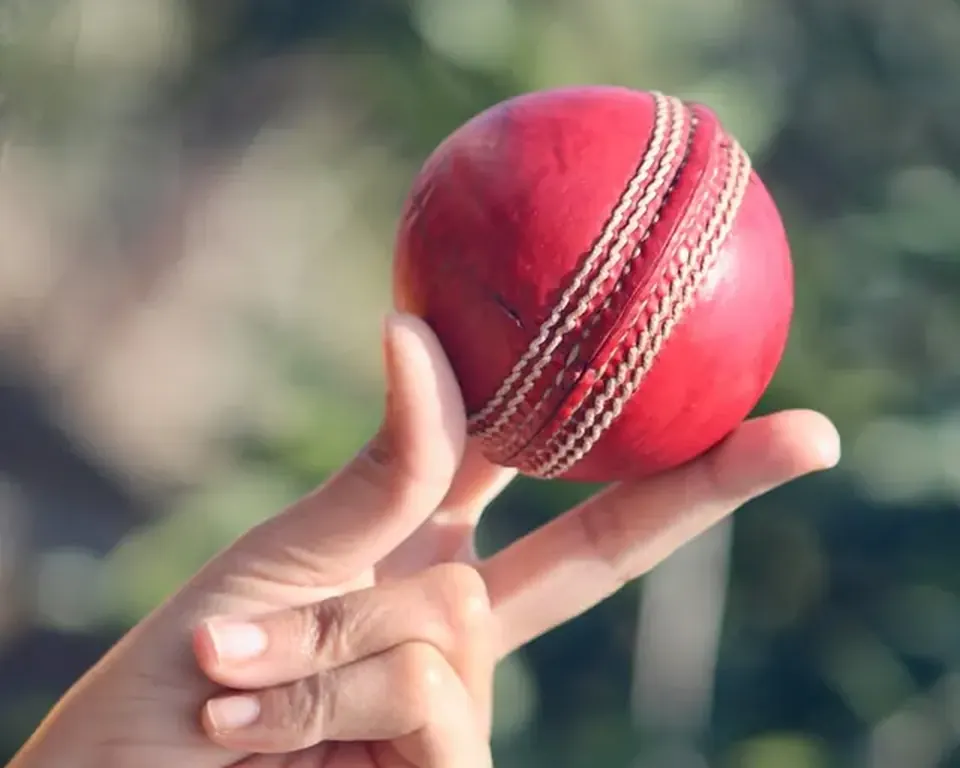
In Australian cricket, the difference between a series win and a series loss often comes down to one simple act: holding a catch. Whether you're fielding at short leg during a Sheffield Shield clash, patrolling the boundary at the MCG during a BBL fixture, or stationed in the slips during an Ashes Test, the ability to catch under pressure separates the reliable from the reckless.
This guide is designed for grassroots players, local club coaches, and aspiring cricketers who want to transform their catching from a liability into a weapon. We'll walk through a practical, step-by-step checklist of drills that simulate match pressure, build confidence, and develop the reflexes required at every level of the game.
What You'll Achieve
By working through these drills, you will:
- Develop consistent catching technique under simulated match conditions
- Improve reaction time and hand-eye coordination
- Build mental resilience for high-pressure fielding situations
- Reduce dropped catches in competitive matches
- Create a repeatable training routine you can use alone or with a partner
Prerequisites / What You Need
Before you begin, ensure you have the following equipment and setup:
- Cricket balls (4-6 recommended; use proper leather balls for realism, but start with tennis balls for beginners)
- Catching cradle or rebound net (optional but helpful for solo work)
- A partner (preferably someone who can throw accurately at varying speeds)
- Cones or markers (to define fielding positions)
- Protective gear (helmet for close-in catching, especially at silly point or short leg)
- Water bottle (these drills are intensive)
- Stopwatch or phone timer (for pressure timing elements)
Step-by-Step Process
Step 1: Establish Your Base Technique (The Foundation Drill)
Before adding pressure, you must own the fundamentals. This drill ingrains the correct hand position and body alignment.
Setup: Stand 10 metres from your partner. Mark your position with a cone.
Execution:
- Stand with feet shoulder-width apart, knees slightly bent, weight on the balls of your feet.
- Present your hands with fingers pointing upward for high catches (above chest height) or downward for low catches (below chest height).
- Your partner throws a gentle, lobbed catch directly at your chest.
- Focus on watching the ball all the way into your hands.
- Give with the ball—allow your hands to absorb the impact by moving backward slightly.
Why it works: This builds muscle memory for the soft hands technique that elite players use to make difficult chances look routine. The ability to give with the ball in the slips is a hallmark of reliable catching.
Step 2: Add Movement (The Reactive Catch Drill)
Static catching rarely happens in a match. This drill introduces lateral movement.
Setup: Place two cones 5 metres apart. Stand at the midpoint.
Execution:
- Your partner stands 15 metres away with two balls.
- Your partner calls "left" or "right" as they throw.
- You must shuffle laterally to the cone, set your feet, and catch.
- Return to the midpoint between each catch.
- Your partner varies the height and trajectory—high, low, wide.
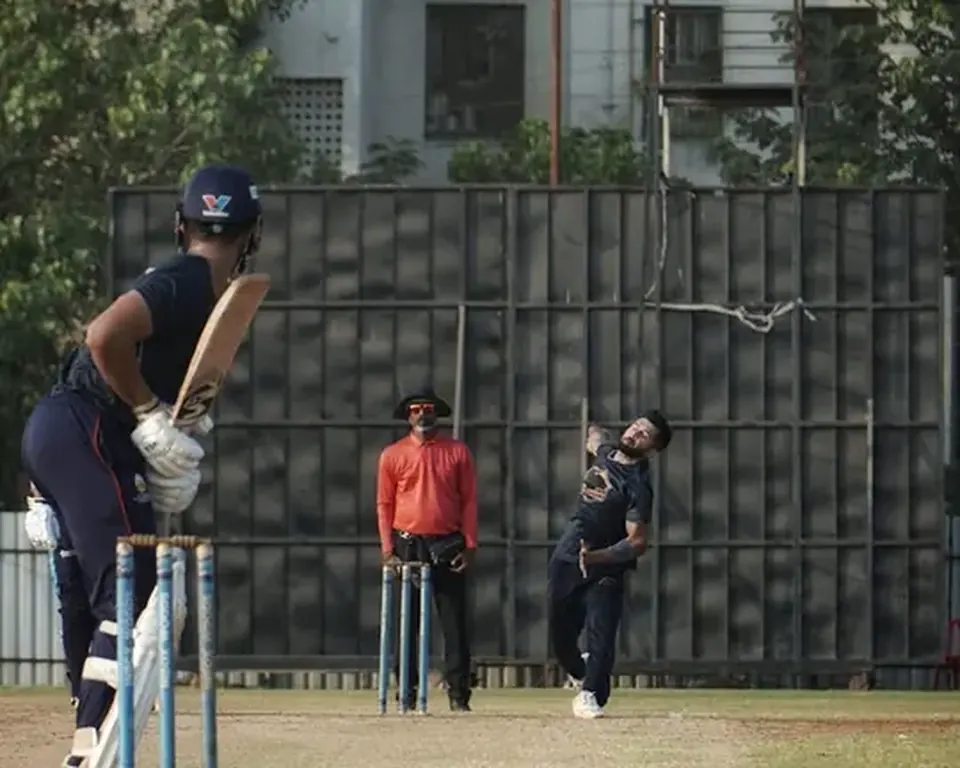
Progression: Reduce the time between throws. Aim for a catch every 4-5 seconds to simulate the quick transitions of a BBL powerplay or a T20 World Cup final.
Common mistake: Diving unnecessarily. Stay on your feet unless the ball is clearly out of reach. Diving should be a last resort, not a default.
Step 3: The Pressure Catch (Timed High-Intensity Drill)
This is where we introduce the "under pressure" element. This drill mimics the feeling of a crucial moment—a late-order batsman skying one in a Sheffield Shield final, or a mistimed pull shot during an Ashes Test.
Setup: You stand at a designated fielding position (e.g., mid-off, cover, or deep square leg). Your partner has 6 balls ready.
Execution:
- Your partner throws a series of catches at varying speeds and trajectories.
- You have 60 seconds to complete as many clean catches as possible.
- Every dropped catch adds 5 seconds to your time.
- After 60 seconds, count your successful catches.
- Repeat for 3 rounds, aiming to improve your score each time.
- Beginner: 8-10 catches per round
- Intermediate: 12-15 catches per round
- Advanced: 16+ catches per round
Step 4: Close-In Catching (The Reflex Drill)
Close-in fielders—silly point, short leg, forward short leg—face the highest risk and the greatest reward. This drill builds the lightning reflexes needed in these positions.
Setup: You stand 4-6 metres from your partner. Wear a helmet with a faceguard. Your partner stands behind a net or screen (optional) to add unpredictability.
Execution:
- Your partner throws the ball with minimal wind-up—sharp, short-range catches.
- Vary the height: chest-high, thigh-high, head-high.
- Keep your hands up and ready at all times.
- Do not flinch or turn away. Watch the ball into your hands.
- Catch with soft hands, absorbing the impact.
Progression: Have your partner use a tennis ball or reaction ball (a ball that bounces unpredictably) to sharpen your reflexes further.
Common mistake: Closing your eyes. This is a natural fear response. Practice with a soft ball initially until you build confidence. Remember: the ball is smaller than your hand—trust your technique.
Step 5: High Ball Judgement (The Skier Drill)
Dropped skiers cost matches. This drill trains your judgement under a high ball, especially when the sun, wind, or floodlights are factors.
Setup: Stand in an open area, preferably outdoors. Your partner stands 30-40 metres away.
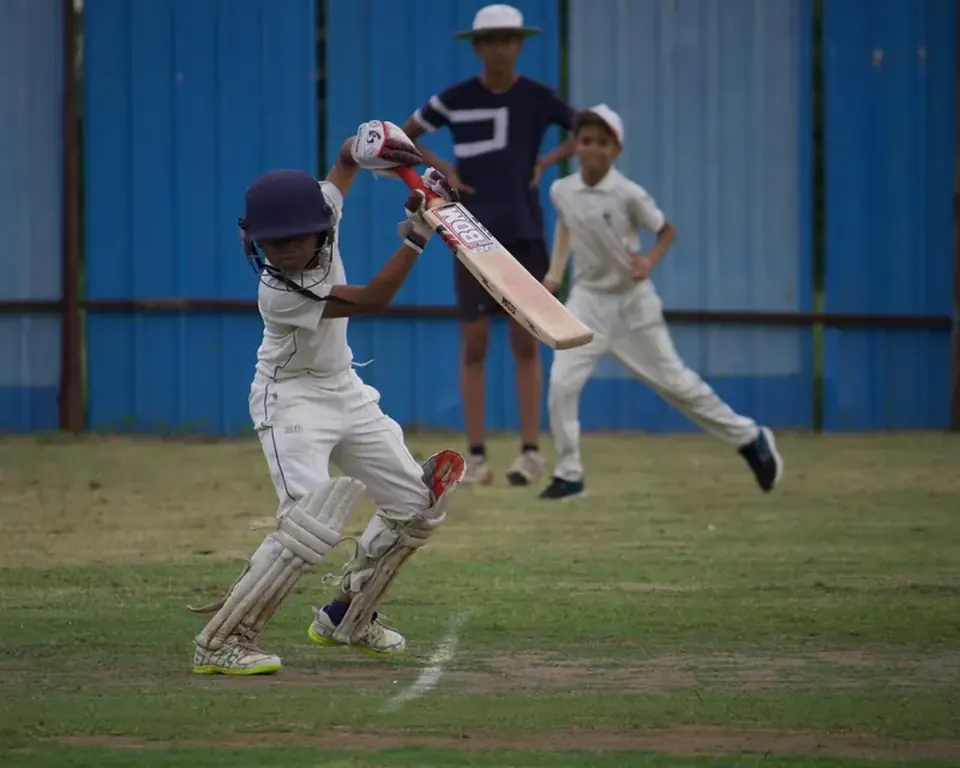
Execution:
- Your partner hits or throws high, arcing balls (simulating a skied pull shot or mis-hit drive).
- You must call "mine" or "yours" loudly if training with others.
- Track the ball from the moment it leaves the bat or hand.
- Keep your eyes on the ball—do not look at the ground or other fielders.
- Set your feet early. Do not backpedal; turn and run to where the ball will land.
- Catch with hands above your head, fingers pointing up, thumbs together.
Progression: Add a second fielder to simulate communication under a high ball. This is crucial for club and grassroots teams where miscommunication is a common cause of dropped catches.
Why it works: This drill directly translates to match scenarios. High balls caught under pressure at second slip or in the deep require the same technique of tracking the ball and setting early.
Step 6: Match Simulation Drill (The Final Test)
This drill combines all elements—movement, pressure, reflexes, and high balls—into a single, match-realistic session.
Setup: Mark out a fielding zone (e.g., cover to mid-wicket, or a slip cordon area). Use cones to define positions.
Execution:
- Your partner stands at varying distances (10-40 metres) and throws a sequence of catches.
- The sequence simulates a match over:
- 10 balls (overs 1-2: high intensity, quick singles)
- 10 balls (overs 3-4: slower, tactical placement)
- 10 balls (overs 5-6: pressure, skiers, and sharp chances)
- Keep a tally of catches taken vs. drops.
- Aim for 85% success rate or higher.
- Clean catch: +2 points
- Catch with fumble but held: +1 point
- Dropped catch: -2 points
- Missed chance (ball hits ground): -3 points
Pro Tips
- Watch the ball, not the batsman. In a match, your eyes should follow the ball from the bowler's hand to the bat, then to your hands. Do not anticipate—react.
- Use soft hands. This is the single most important technique for slip catching. Let your hands give with the ball rather than snatching at it.
- Stay low in close positions. At short leg or silly point, keep your centre of gravity low. This allows you to react quickly to deflections.
- Communicate clearly. In the field, always call "mine" or "yours" decisively. Hesitation leads to collisions and drops.
- Practice with different balls. Use a red ball for Sheffield Shield and Test match simulation, a white ball for BBL and T20 World Cup preparation, and a pink ball for day-night fixtures.
- Simulate match conditions. If you're training for a day game, train in sunlight. For a night game, train under lights. Your eyes need to adapt.
Common Mistakes
| Mistake | Why It Happens | How to Fix |
|---|---|---|
| Snatching at the ball | Fear of dropping | Focus on "giving" with the catch |
| Taking eyes off the ball | Anticipating impact | Keep watching until ball hits hands |
| Poor footwork | Laziness or fatigue | Shuffle, don't stand still |
| Diving unnecessarily | Over-commitment | Stay on feet unless ball is out of reach |
| Ignoring communication | Ego or assumption | Call loudly and early |
Checklist Summary
Use this checklist before, during, and after your catching sessions:
Pre-Session Preparation
- Warm up thoroughly (light jog, arm circles, finger stretches)
- Check equipment (balls, gloves, helmet, cones)
- Set up fielding zones with markers
- Hydrate adequately
- Complete 20 static catches (Foundation Drill)
- Complete 30 reactive catches with lateral movement (Reactive Catch Drill)
- Complete 3 rounds of timed pressure catches (Pressure Catch Drill)
- Complete 25 close-in catches with helmet on (Reflex Drill)
- Complete 10 high ball catches (Skier Drill)
- Complete 30-ball match simulation (Final Test)
- Record your catch rate (percentage of successful catches)
- Identify which drill was most challenging
- Note any hand soreness or fatigue (rest if necessary)
- Plan next session's focus areas
- Complete this full session at least twice per week
- Aim for 90%+ success rate in static drills
- Aim for 80%+ success rate in pressure drills
- Progress to harder variations (faster throws, smaller balls, wind conditions)
Next Steps
Mastering catching under pressure is a journey, not a destination. The best fielders in Australian cricket all started with the basics and built up through consistent, focused practice.
For further improvement, explore our related guides on running between wickets techniques and bowling action improvement tips to round out your all-round game. And for more tactical training resources, visit our tactics and training hub.
Remember: catches win matches. Make yours count.
Reader Comments (0)