


In the high-stakes theatre of Twenty20 cricket, few deliveries command as much respect—or fear—as the yorker. Bowled with precision, it is the ultimate equaliser: a ball that skids under the bat, crashes into the base of middle stump, or forces a scrambling defensive prod. Missed by a fraction, it becomes a full toss that disappears into the stands. For Australian bowlers, from the grassroots nets to the Big Bash League (BBL) and Women's Big Bash League (WBBL) stages, mastering the yorker is not merely a skill—it is a survival instinct.
This guide dissects the art of yorker practice, offering evidence-based techniques, match-day context, and drills that bridge the gap between net sessions and the cauldron of a T20 World Cup final. Whether you are a young quick aiming for a Sheffield Shield contract or a club bowler looking to close out an innings, these methods will sharpen your radar and build the muscle memory required to execute under pressure.
Understanding the Yorker: Why It Matters in Australian Cricket
The yorker is defined by its landing zone—pitched so that the ball reaches the batsman’s feet at the moment of impact, ideally just behind the popping crease. In Australian conditions, where pitches at the Melbourne Cricket Ground (MCG), Sydney Cricket Ground (SCG), and WACA Ground offer varying degrees of bounce and pace, the yorker becomes a tactical weapon.
- In Test cricket: Pat Cummins and Josh Hazlewood use the yorker sparingly, often as a surprise weapon to break partnerships or target the base of the stumps.
- In limited-overs cricket: The yorker is the death-over staple. Bowlers like Mitchell Starc and Jhye Richardson have built careers on their ability to nail the blockhole with the game on the line.
The Physics of the Yorker
A yorker’s success depends on three variables:
- Release point: Higher release points (taller bowlers) allow the ball to dip late, making it harder for batsmen to pick.
- Seam position: An upright seam helps the ball skid through, while scrambled seam can cause deviation off the pitch.
- Pace: Speed is not everything—accuracy trumps raw velocity. A 135 km/h yorker on the toes is more dangerous than a 150 km/h full toss.
Section 1: The Foundation – Grip, Release, and Alignment
Before any drill, a bowler must master the fundamentals. The yorker is not a magic delivery; it is a repeatable action refined through thousands of repetitions.
Grip
The standard seam grip—index and middle fingers either side of the seam, thumb resting underneath—works for most yorkers. However, slight variations can aid accuracy:
- For in-swinging yorkers: Angle the seam slightly towards the slips, with the shiny side on the leg side.
- For out-swinging yorkers: Angle the seam towards fine leg, shiny side on the off side.
Release Point
The release point for a yorker should be slightly lower than for a length ball. This allows the ball to skid rather than bounce. Bowlers should focus on:
- Keeping the wrist firm: A floppy wrist causes the ball to loop or fall short.
- Releasing just before the front foot lands: This timing ensures the ball is driven into the pitch rather than floated.
Alignment
Body alignment is critical. A common mistake is bowling across the body, which pulls the yorker down the leg side. The front shoulder should point directly at the target—whether that is middle stump, the batsman’s toe, or a cone placed on the blockhole.
Drill: Place a cone on a good length spot, another on a yorker length spot, and a third on a full toss spot. Bowl 10 balls aiming for the yorker cone. If you hit the good length cone, adjust your release point higher. If you hit the full toss cone, lower your release point.
Section 2: Target-Based Drills – Building Accuracy
Accuracy is the yorker’s currency. Without it, the delivery becomes a liability. The following drills are adaptable for any level.
The Cone Drill
Place three cones in a line across the pitch:
- Cone 1: On off stump, just behind the popping crease.
- Cone 2: On middle stump, just behind the popping crease.
- Cone 3: On leg stump, just behind the popping crease.
Variation: Add a fourth cone on the batsman’s front foot, simulating a yorker aimed at the toes. This is particularly useful for death bowling in the BBL, where batsmen often shuffle across.
The Two-Ball Drill
This drill simulates the transition from a length ball to a yorker.
- Bowl one ball on a good length.
- Immediately bowl the next ball as a yorker.
- Repeat for 12 balls.
The Run-Up Consistency Drill
A yorker’s accuracy often breaks down when the run-up is inconsistent. Mark your run-up with cones or chalk, and practice bowling yorkers from the same spot every time. Use a stopwatch to ensure your delivery stride timing is consistent.
Pro tip: Some elite bowlers are known for their metronomic run-up. Rarely deviating from their approach allows them to land yorkers with surgical precision.
Section 3: Match Simulation – Recreating Pressure
Nets are sterile. Matches are chaotic. To master the yorker, a bowler must practice under conditions that mimic the death overs of a T20 World Cup final or a BBL eliminator.
The 10-Ball Challenge
Set a scenario: The batting side needs 12 runs off the last 6 balls. The bowler must bowl 6 yorkers, aiming for the blockhole. No full tosses, no half-volleys. If the bowler bowls a bad ball, they start again from ball 1.
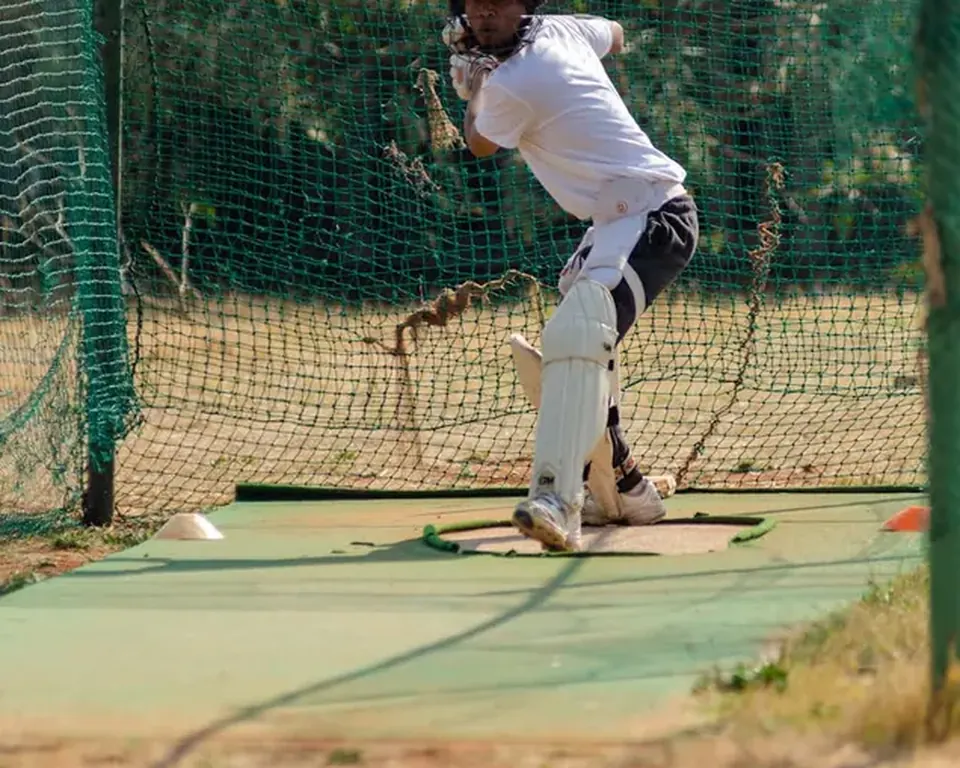
This drill builds mental resilience. It forces the bowler to execute under self-imposed pressure, replicating the feeling of a packed MCG crowd.
The Field Placement Drill
Place fielders in death-over positions—deep midwicket, long-on, long-off, and a deep square leg. The bowler must bowl yorkers that prevent the batsman from getting under the ball. If the ball lands short, the batsman (or a coach with a bat) can hit it over the top.
This drill teaches the bowler to adjust length based on field placement. For example, if the off-side boundary is shorter, the yorker should be aimed at middle and leg to prevent the batsman from freeing their arms.
The Two-Batsman Drill
In the WBBL, death bowling often involves two set batsmen. Set up two batsmen at the crease—one on strike, one at the non-striker’s end. The bowler must bowl yorkers while the batsmen attempt to steal runs or hit boundaries. This drill adds the element of running between wickets, forcing the bowler to think about run-out opportunities as well.
Section 4: Variations – The Slower Ball Yorker and the Wide Yorker
The yorker is not a one-size-fits-all delivery. In modern Australian cricket, variations are essential.
The Slower Ball Yorker
This delivery combines the deception of a slower ball with the accuracy of a yorker. It is particularly effective on slow pitches at the SCG or WACA Ground, where pace alone may not trouble batsmen.
Technique: Use the same grip and release point, but hold the ball deeper in the palm (like a split-finger grip). The ball will skid through slower, forcing the batsman to adjust their timing.
Drill: Bowl 6 slower ball yorkers in a row, aiming for the blockhole. Record the speed difference between your normal yorker and the slower version. Aim for a noticeable drop.
The Wide Yorker
A wide yorker is aimed at the tramlines outside off stump, making it difficult for the batsman to reach. It is a high-risk, high-reward delivery—if executed, it forces a dot ball or a mistimed drive. If missed, it becomes a wide.
Drill: Place a cone 12 inches outside off stump, just behind the popping crease. Bowl 10 yorkers targeting that cone. This drill is used by BBL bowlers who rely on wide yorkers to dry up runs.
The Toe-Crusher
This variation targets the batsman’s front foot, particularly effective against batsmen who plant their front foot early.
Drill: Place a cone on the batsman’s front foot (simulated by a shoe or a pad). Bowl 10 yorkers aiming to hit the cone. This drill builds the ability to target a moving target.
Section 5: Mental Preparation – The Yorker Mindset
The yorker is as much a mental weapon as a physical one. Batsmen who fear the yorker will back away, exposing their stumps, or premeditate a scoop shot, creating catching opportunities.
Visualisation
Before a match, spend 5 minutes visualising bowling yorkers. See the ball skidding under the bat, hitting the base of off stump. Hear the sound of the stumps being disturbed. This mental rehearsal primes the neural pathways for execution.
Breathing Techniques
Under pressure, adrenaline can cause a bowler to rush their run-up or grip the ball too tightly. Use box breathing (inhale for 4 seconds, hold for 4, exhale for 4, hold for 4) during the walk back to the mark. This lowers heart rate and improves focus.
The Reset Routine
If you bowl a bad yorker—a full toss or a half-volley—reset immediately. Take a deep breath, adjust your grip, and focus on the next ball. Dwelling on a mistake leads to a cascade of errors.
Example from the BBL: In a match, a bowler bowled a full toss that was hit for six. Instead of panicking, he reset, bowled a perfect yorker next ball, and took a wicket. This mental toughness is what separates BBL stars from journeymen.
Section 6: Common Mistakes and How to Fix Them
Even elite bowlers struggle with the yorker. Here are the most common errors and their fixes.
Mistake 1: Bowling Too Short
A yorker that lands on a good length is a half-volley. The batsman can drive it straight.
Fix: Lower your release point. Imagine you are bowling at a target just behind the popping crease, not at the batsman’s feet.
Mistake 2: Bowling Too Full
A yorker that lands on the batsman’s toes is a full toss. It can be hit for six.
Fix: Aim for the blockhole—the area just behind the popping crease. Use a cone or a marker to define this zone.
Mistake 3: Losing Line
A yorker that drifts down leg side is a free hit for the batsman.
Fix: Focus on your front shoulder alignment. If the ball is drifting leg side, your front shoulder is opening too early. Keep it closed until release.
Mistake 4: Overthinking
A bowler who thinks too much about the yorker will tense up and lose rhythm.
Fix: Trust your practice. In the nets, you have bowled thousands of yorkers. In the match, let your body do what it has been trained to do.
Section 7: Equipment and Technology – Tools for Improvement
Modern technology can accelerate yorker development.
Bowling Machines
Set a bowling machine to yorker length at varying speeds. This allows you to practice without a bowler, focusing solely on accuracy.
Video Analysis
Record your bowling action and review it in slow motion. Look for:
- Release point: Is it consistent?
- Wrist position: Is the wrist firm at release?
- Follow-through: Is your body aligned with the target?
Smart Balls
Some training balls have embedded sensors that measure speed, spin, and release point. These provide instant feedback, allowing you to adjust mid-session.
Conclusion: The Yorker as a Career-Defining Weapon
The yorker is not just a delivery—it is a statement. It says, “I am in control, even when the game is not.” For Australian bowlers, from the Sheffield Shield to the BBL and beyond, mastering the yorker opens doors. It is the skill that wins finals, breaks partnerships, and earns the trust of captains.
But the yorker is also a journey. It requires patience, repetition, and a willingness to fail. Every full toss is a lesson. Every toe-crusher is a step closer to mastery. As you practice these techniques, remember that the best yorker bowlers in the world have all spent hours in the nets, alone with a cone and a target.
So grab your spikes, mark your run-up, and start bowling. The blockhole awaits.
Further Reading
- Tactics Training Hub: Explore more bowling and fielding guides.
- Spin Bowling Variations Guide: Complement your yorker with spin options.
- Video Analysis Tips: Refine your technique with visual feedback.
Reader Comments (0)